Exhibitions
Current Exhibitions
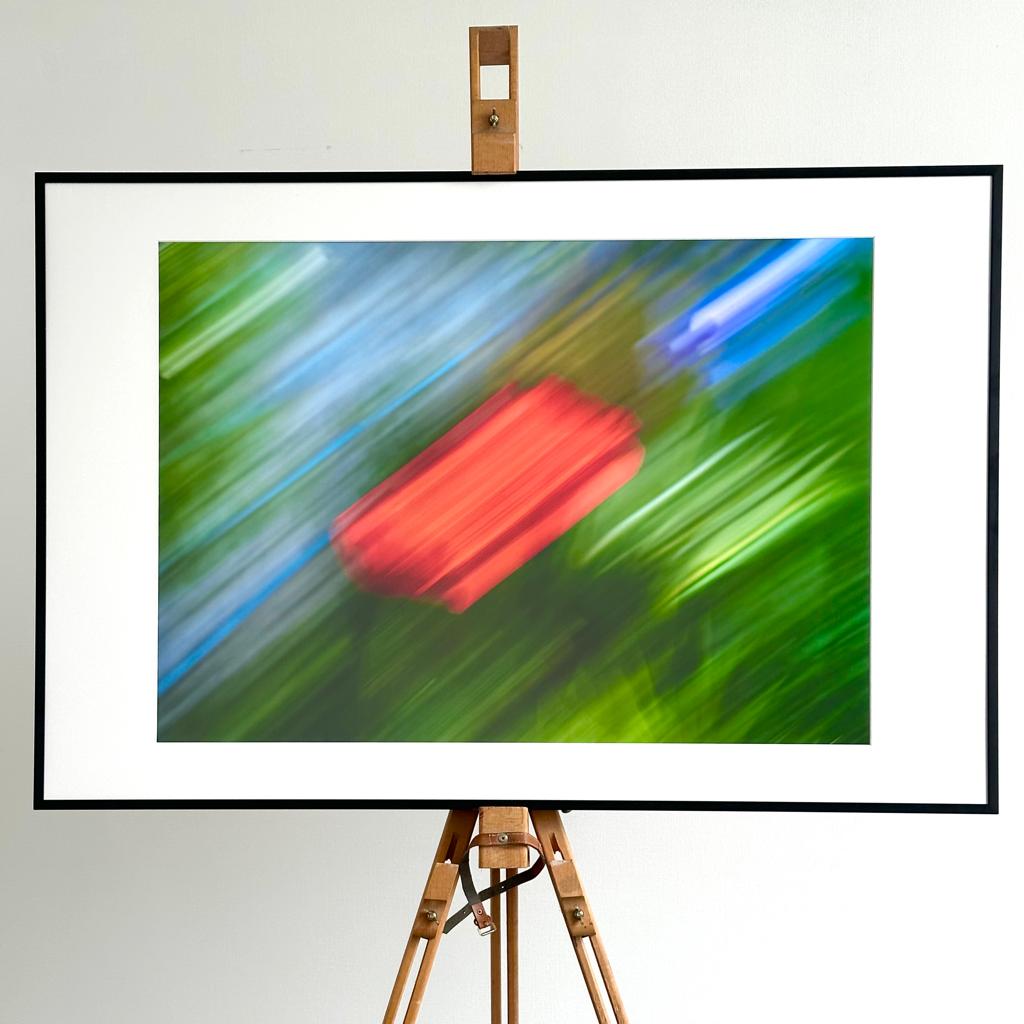
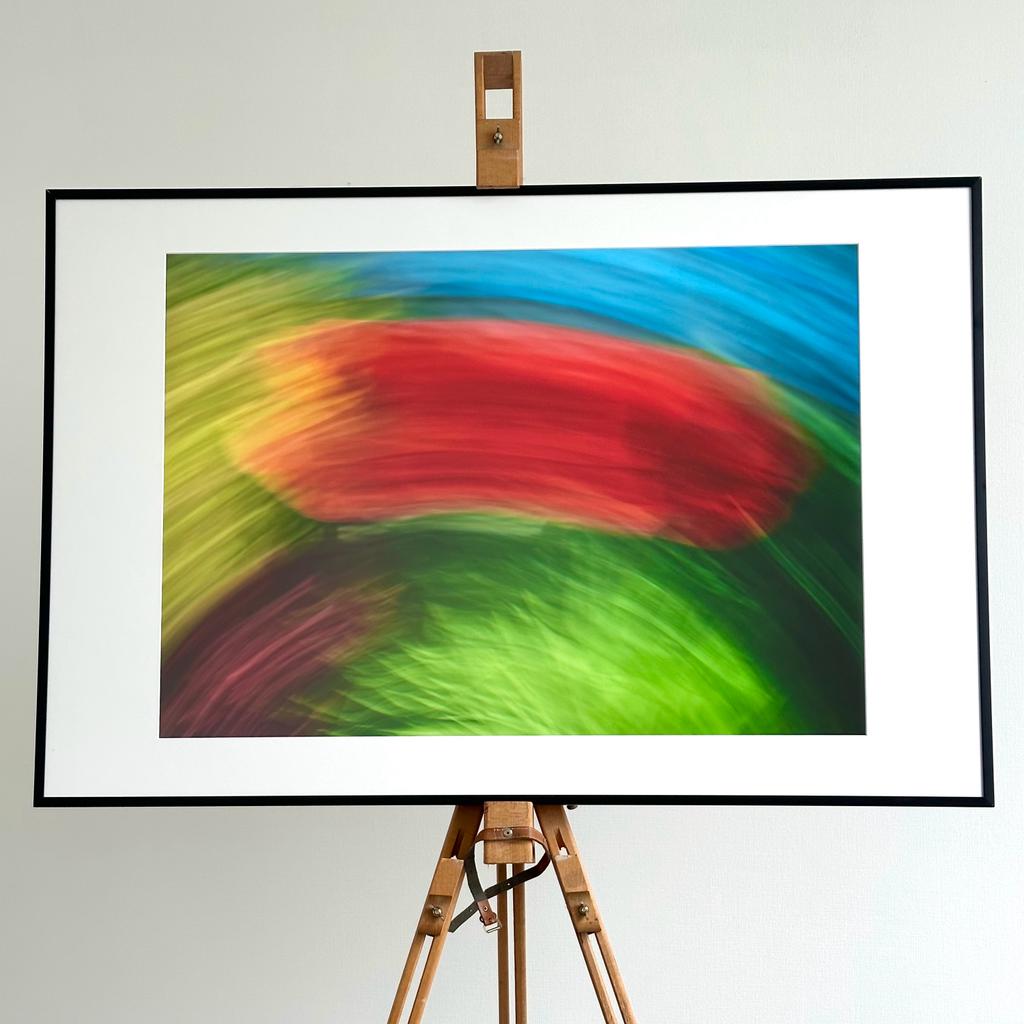
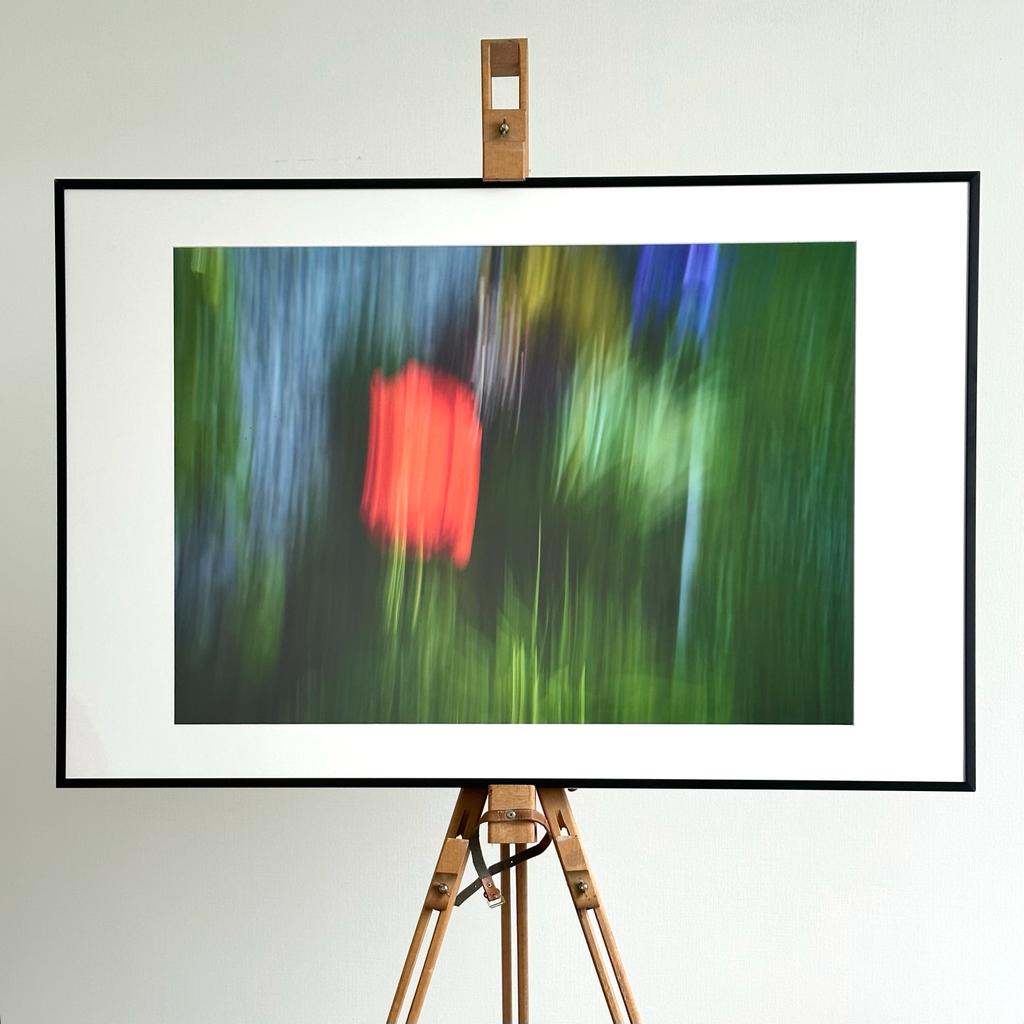
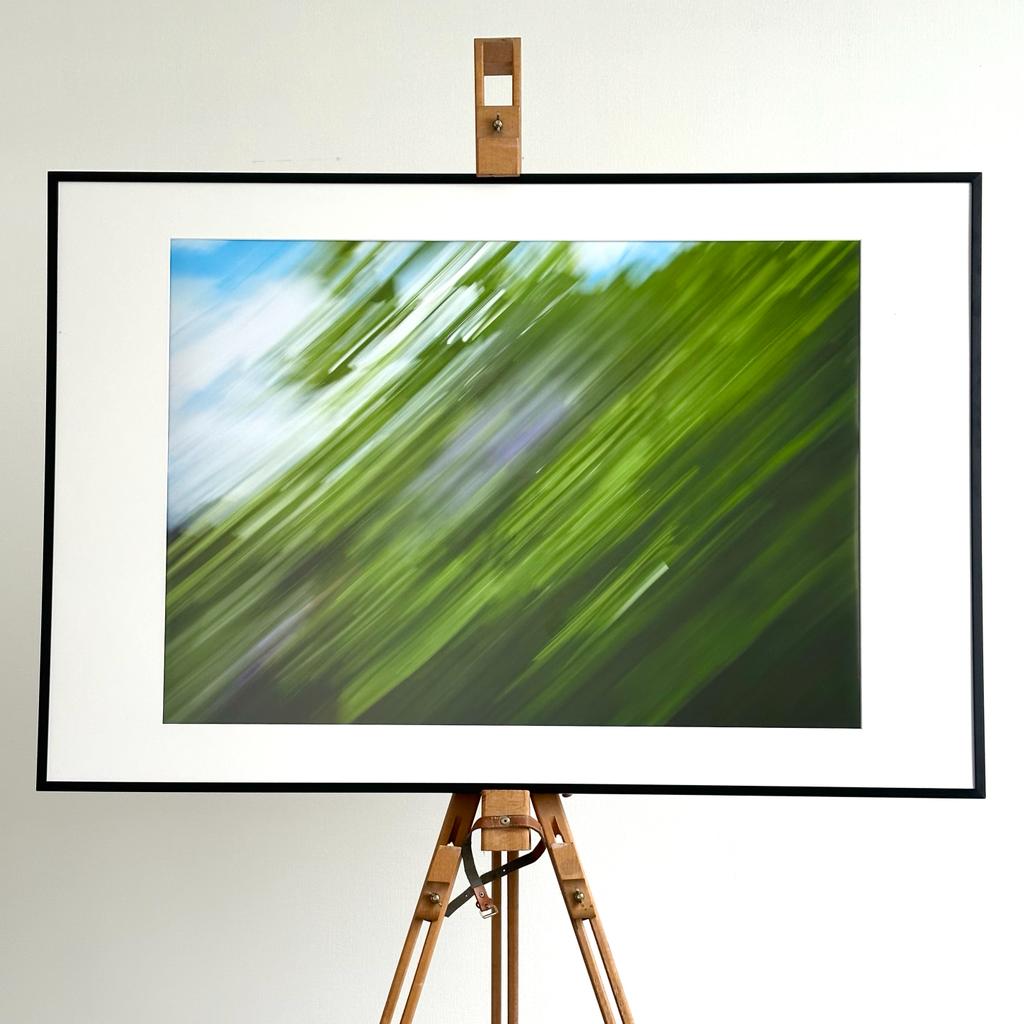
13. 02. - 31. 05. 2026Bin Bear Series: A World Where Wildernes No Longer Belongs expanded with the author’s impressionistic photographs and her four most recent forest paintings
at Slovak Museum of Nature Protection and Speleology. Visit: www.smopaj.sk
The exhibition explores the relationship between humans, nature, and animals through an anthropocentric lens, revealing how our perception reshapes these connections. It mirrors society’s indifference toward nature conservation and animal life. The visitors themselves symbolize this attitude as they move among works designed to be viewed from above – as “masters of creation.”
Past Exhibitions
2025: Bin Bear Series at Ďurkovec Centrum
A World Where Wildernes No Longer Belongs
Explores the relationship between humans, nature, and animals through an anthropocentric lens, revealing how our perception reshapes these connections. It mirrors society’s indifference toward nature conservation and animal life. The visitors themselves symbolize this attitude as they move among works designed to be viewed from above – as “masters of creation.”
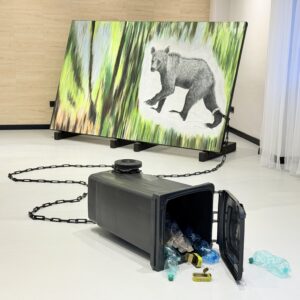
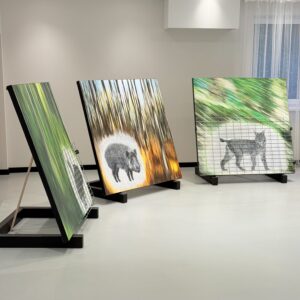
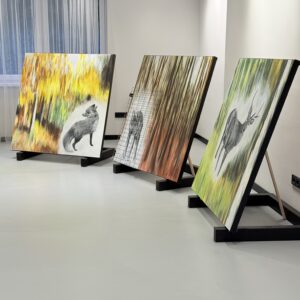
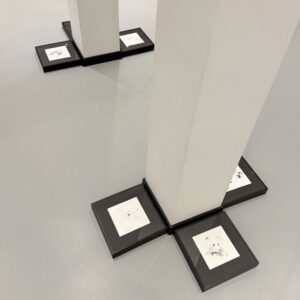
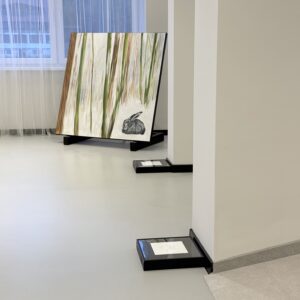
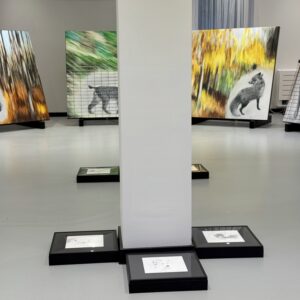
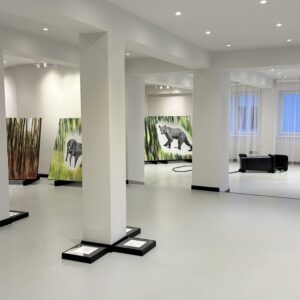
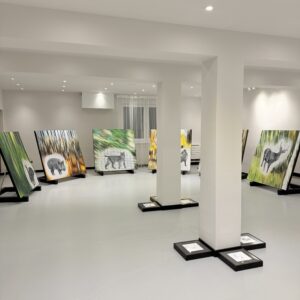
Exhibition took took place at ĎURKOVEC Centrum,Spišské Tomášovce, Slovakia, banquet hall
during October and November, 2025 (all guided tours)
The exhibition Bin Bear Series – as the name itself suggests (“bin” – trash can, “bear” – bear) – is about animals, but not only about them. It is also about us, about people, about nature, its protection, and our attitude towards it. The project was created in collaboration between Janka Kolibri Podkrivacká and photographer and filmmaker Karol Kaliský together with his son Karol Kaliský Jr.
Part One – Paintings and the Forest That Falls Apart
The first part of the exhibition consists of seven paintings combining two techniques and two visual sources – both based on photography. Animals captured in their natural environment by the Kaliskýs are placed into an abstract forest created from the artist’s own impressionistic photographs. The forest here represents an environment we no longer understand. From a distance, we seem to recognize trees, branches, grass, or leaves, yet when we come closer, the whole scene dissolves into a mesh of lines and layers of color. It is an image of the complexity of nature – one that can only be truly understood when we immerse ourselves in it. From afar, problems appear clear and simple, but the closer we look, the more we realize that the first glance never reveals the whole story.
Fear and Boundaries
Encountering wild animals often evokes fear – a primal, instinctive emotion. After such an experience, many people feel that the animal “does not belong” in the same space they inhabit. For this reason, three of the paintings in the exhibition include bars. They also refer to endangered species. The bars, however, are not meant to protect people from animals – but rather the other way around. They remind us that when we walk through the forest, we are entering someone else’s home. We are the visitors, and we should respect the rules of those for whom the forest is home.
Animals That Are Disappearing
The animals are painted in a contrasting style – black and white, partly dreamlike, as if they no longer belonged in the colorful world around them. A similar principle is used in the photographs, which the artist edited to enhance the impression that these creatures are slowly disappearing from our world, the world slowly fading away. The fox, which we still occasionally see, may one day become only a memory – an animal that no longer exists. Thus, the exhibition is not only about the beauty of nature but also about its fragility and the responsibility we all bear.
The View from Above
The works are installed in such a way that visitors look down at the animals. From this position, they become symbolic “masters of creation,” deciding about life, death, and the space for life itself. Yet all the animals return the gaze. Their eyes look straight at the viewer – whether in the paintings or in the photographs placed on the floor, where the sense of human superiority is even more apparent. In the photographs, the artist used painting intervention to intensify emotion. The animal’s gaze is all that remains. It does not speak our language, yet in its silence it tells everything – that it lives, feels, and belongs.
The Central Work – The Bear
The idea for the central painting Bear lived in the artist’s mind for twelve years. It came to life when Karol Kaliský Jr. sent her a photograph of a bear with a frightened look, captured mid-run. From that moment, the entire series began to unfold. The bear, chained to an overturned trash bin spilling cans and plastic bottles, is not only an image of waste problems. It is an image of us all – of a society that, through its actions, ties animals to a world shaped by human activity. The bear that finds corn near the border of a national park does not understand that it is not meant for him. He sees only food. But in this way, we make him dependent – just as we ourselves become dependent on the environment we continually change. Our actions are like the chain around his leg. And as wildness slowly disappears from him, wilderness disappears from our world.
Conclusion
The exhibition Bin Bear Series tells the story of a world transformed by human hands – a world where wildness no longer belongs. It is not a reproach, but a mirror – a quiet invitation to realize that what is once lost may never return. Because our actions are like the chain around the bear’s leg – and with every link, a piece of wildness disappears from him, just as wilderness slowly vanishes from our nature
2025: Beautiful Women Series at Ďurkovec Centrum
Six parts serie dedicated to women who do not or did not consider themselves as beautiful, but they truly are. Beautiful Women Series is a complex art installation featuring various art works centered around this theme. All six parts are conected together by material, colors, details, attitudes, thoughts…
The first part of the installation consists of rough portraits of sixteen different women selected based on their attitudes toward themselves in a covered & uncovered state of the portrait. Some of them have found their beauty in the details of their lives, in the features of their bodies and faces, and have finally valued themselves in terms of love.The veil is essential to the installation. It covers and uncovers not just woman’s face, but also the mindset of both her and the viewer standing in front of her.
The second part is formed by a large format portrait ink paintings on the mesh with embroidered details.The knitted wool lines highlight subtle details that can be easily overlooked. These subtle details are key to beauty in the context of love. The movement of the installation reflects changes over time and evokes shifting perceptions-both of the woman herself and of the viewer standing in front.
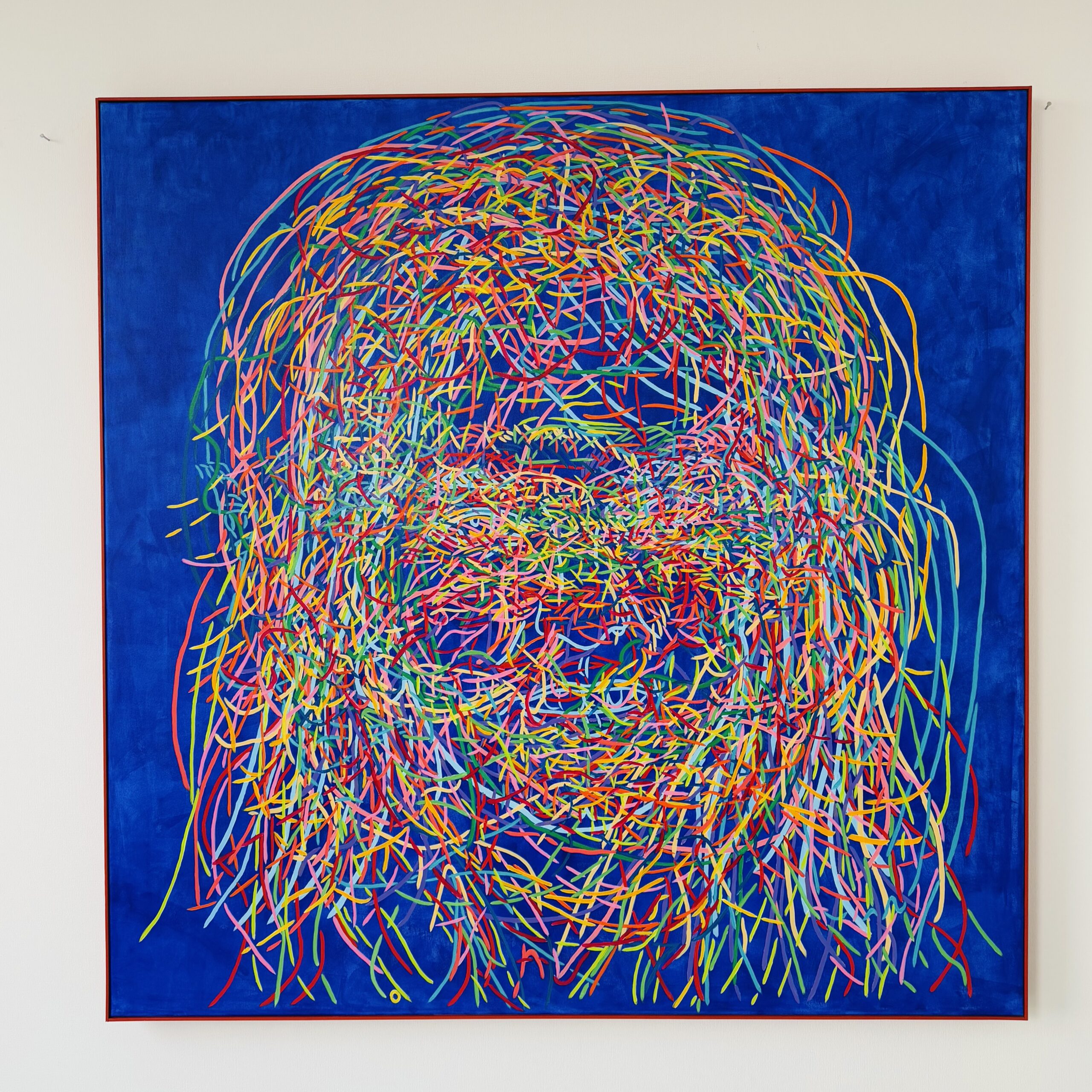
The third part, We are beautiful, 2024 is 150×150 cm acrylic painting merging all sixteen women into the one. By tracing the significant color coresponding with the small rough portraits the viewer can recognize the distinct woman as well as a new face created by all intersections representing embroidery. The lines intersect and merge into one another, revealing parts of the face that are more or less prominent, yet together forming the entire visage
The fourth part is presented by four objects with hidden questions and answers of the women while seeing the reflection of themself or the observer in the mirror while passing by. The hidden questions and answers are possible to see only when the viewer is directly tilted above the object. At that point, herself or himself is the part of the installation. Punctation marks communicate the meaning and can be easily switched as the opposite (depends on the point of view): !? :— explanation by not completing “yes”/“no” ()… explanation by moment of silence
The fifth part is a statue holding a poem titled The Mirror, embroidered with colorful wools representing a connection to all women, as well as the women who are the subjects of this series. The wools climb up the statue, intertwining with single words until they reach the hands, where some continue wrapping around the forearms. This part amplifies the effect of a strong hold of the life itself. The wools create an impression of coloring the entire scene. The statue itself has a non specific but the mirror face which drag in all approaching persons.
The sixth part is represented by the video titled I see containing three stories . One is the beauty ritual of the putting on and removing makeup while intersected with non verbal communication of the older woman of the acceptance of the the beauty as it is. There is no judgement of using makeup or any beauty procedure if the woman is sattisfied by herself. On the background the third story comes in as the dialog between the author and the woman about the meaning of the Beautiful Women Series and her attidute to it.
Full installation of the BEAUTIFUL WOMEN SERIES
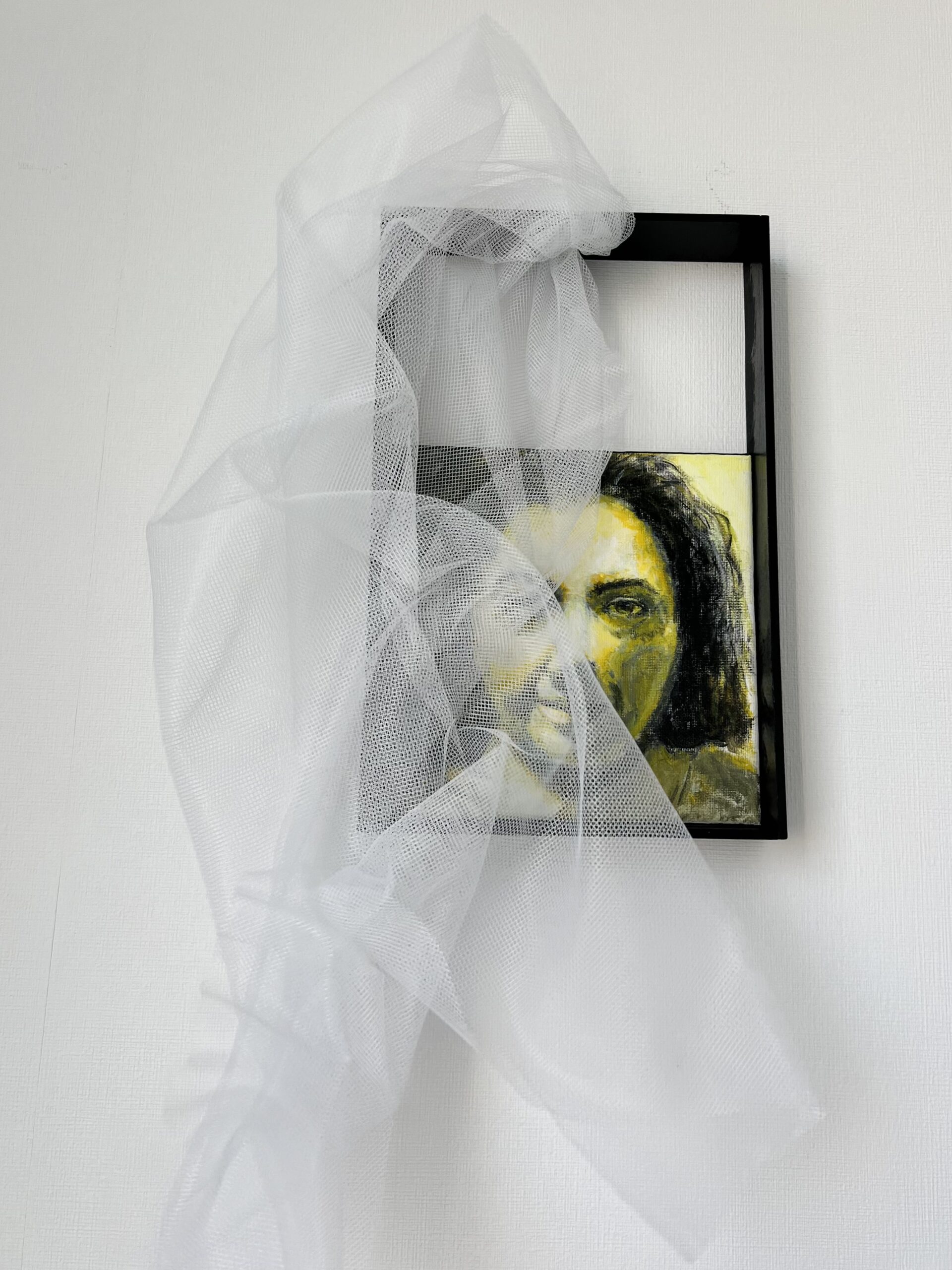
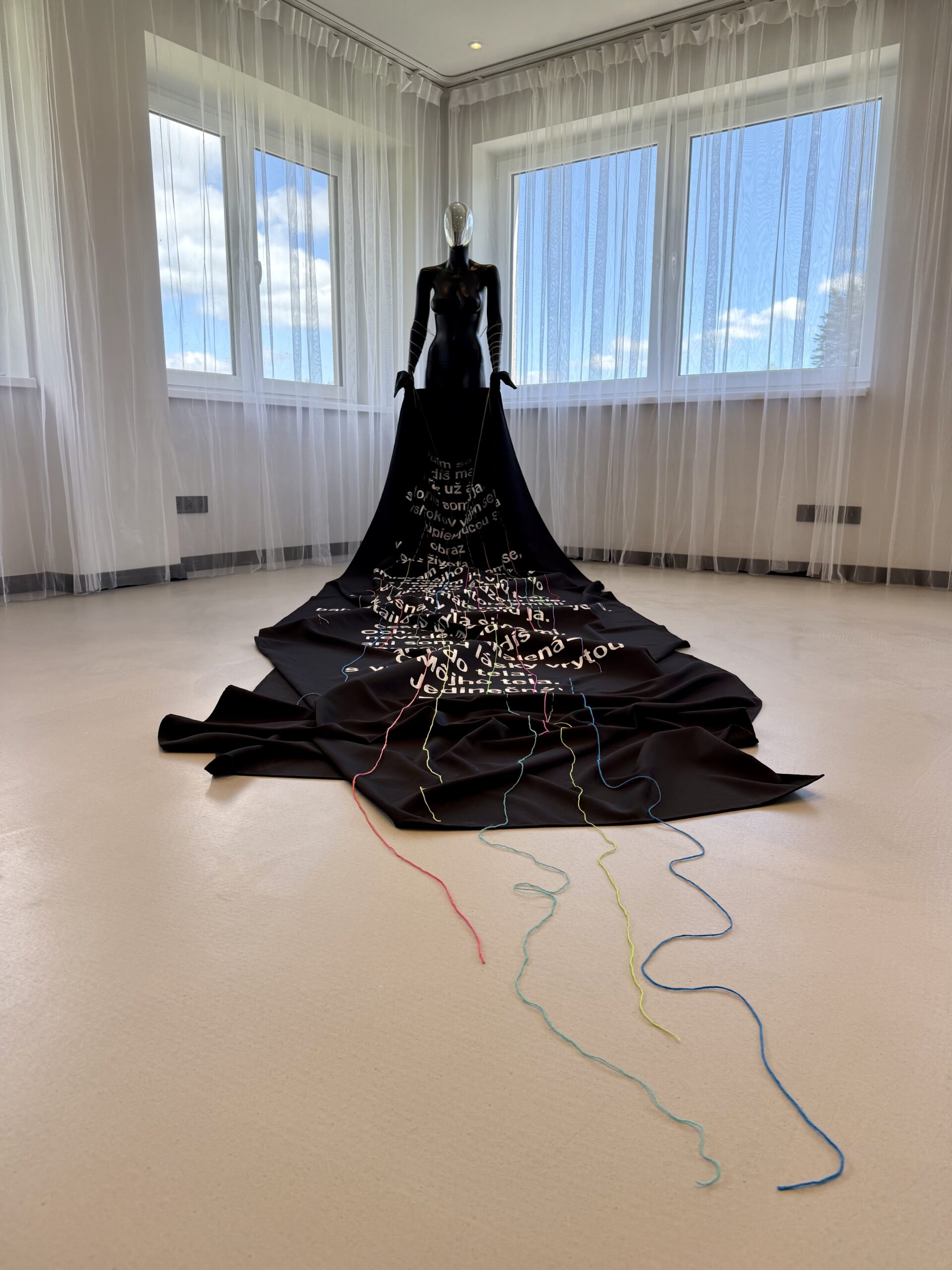
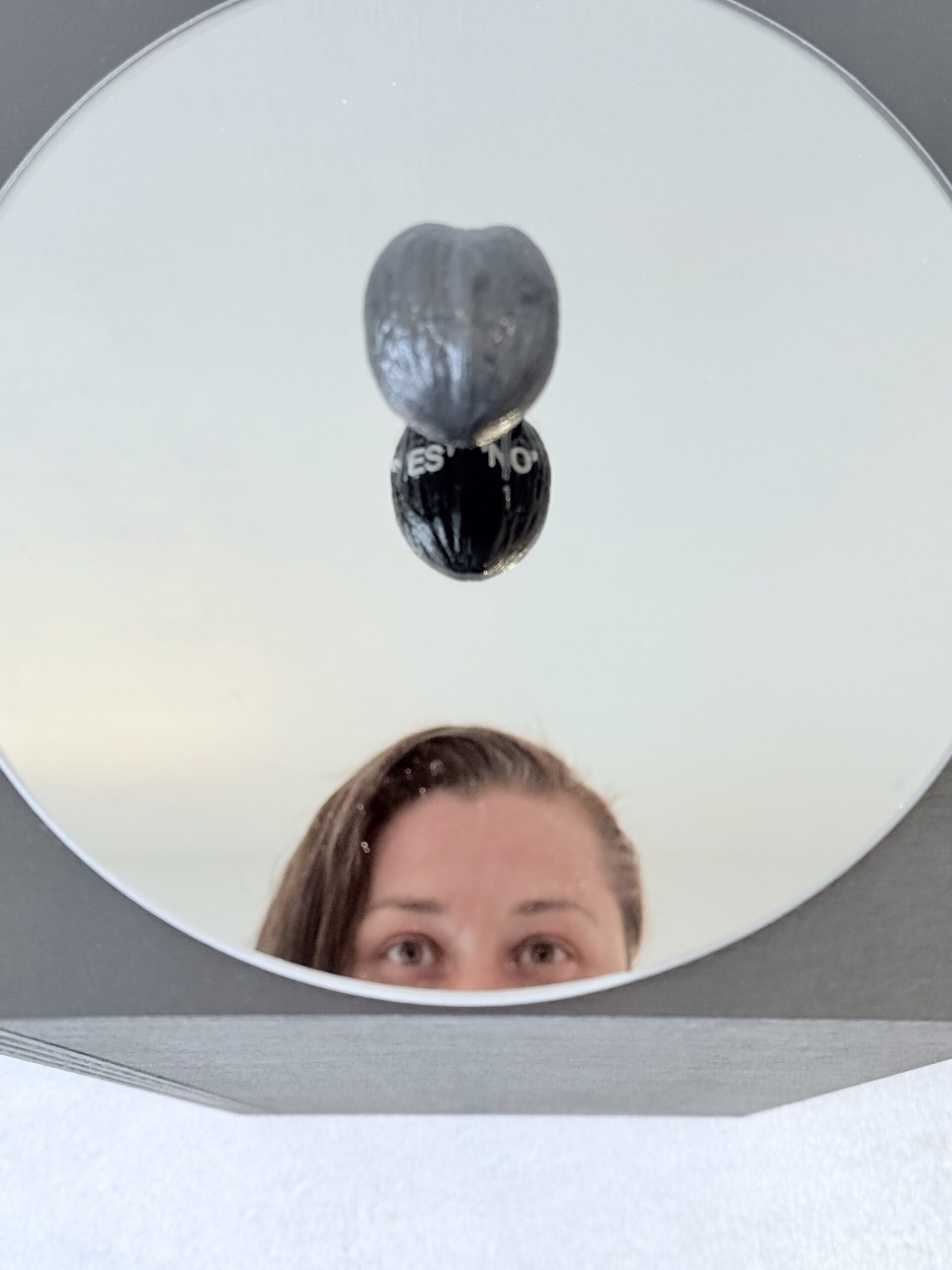
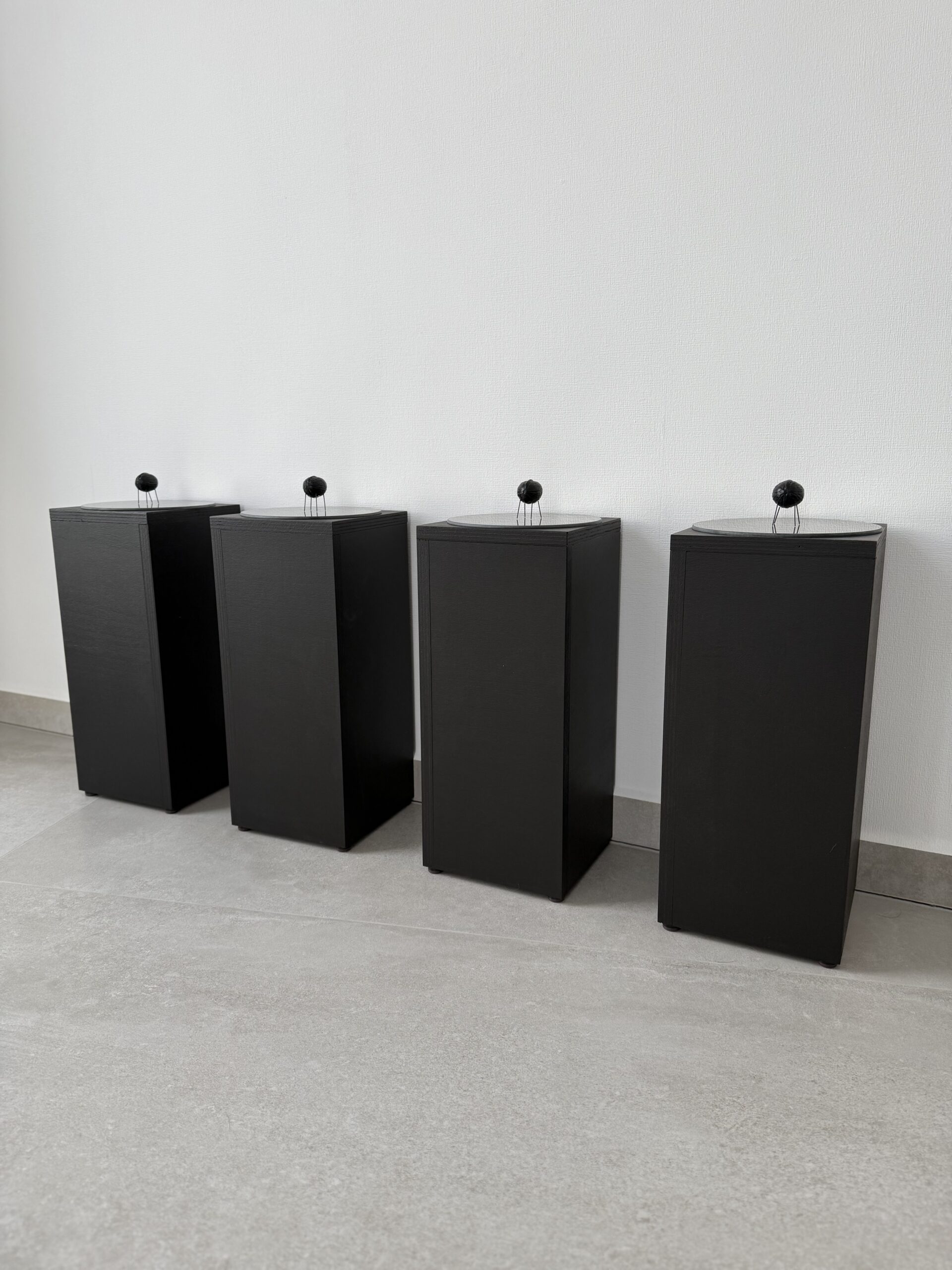
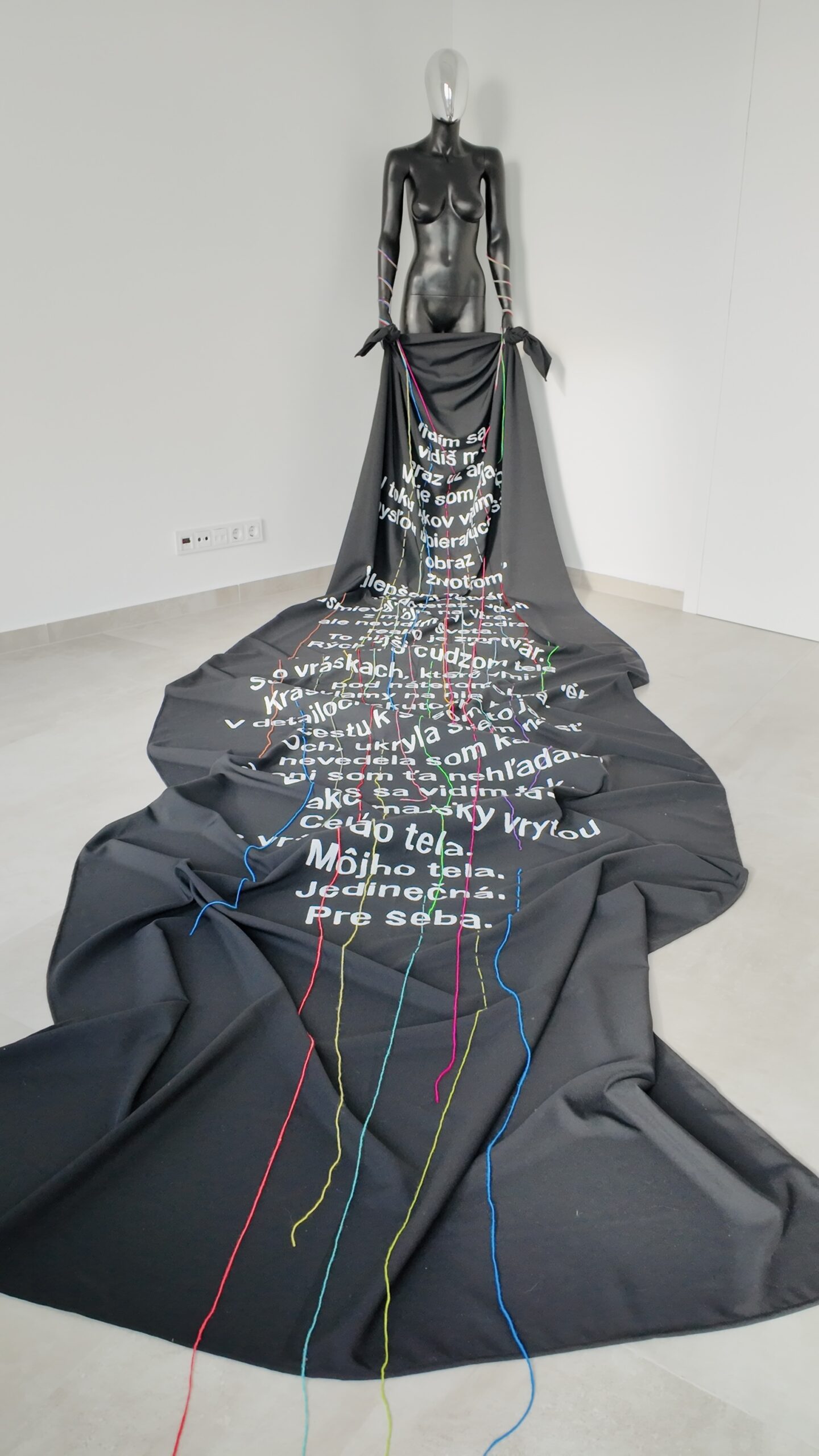
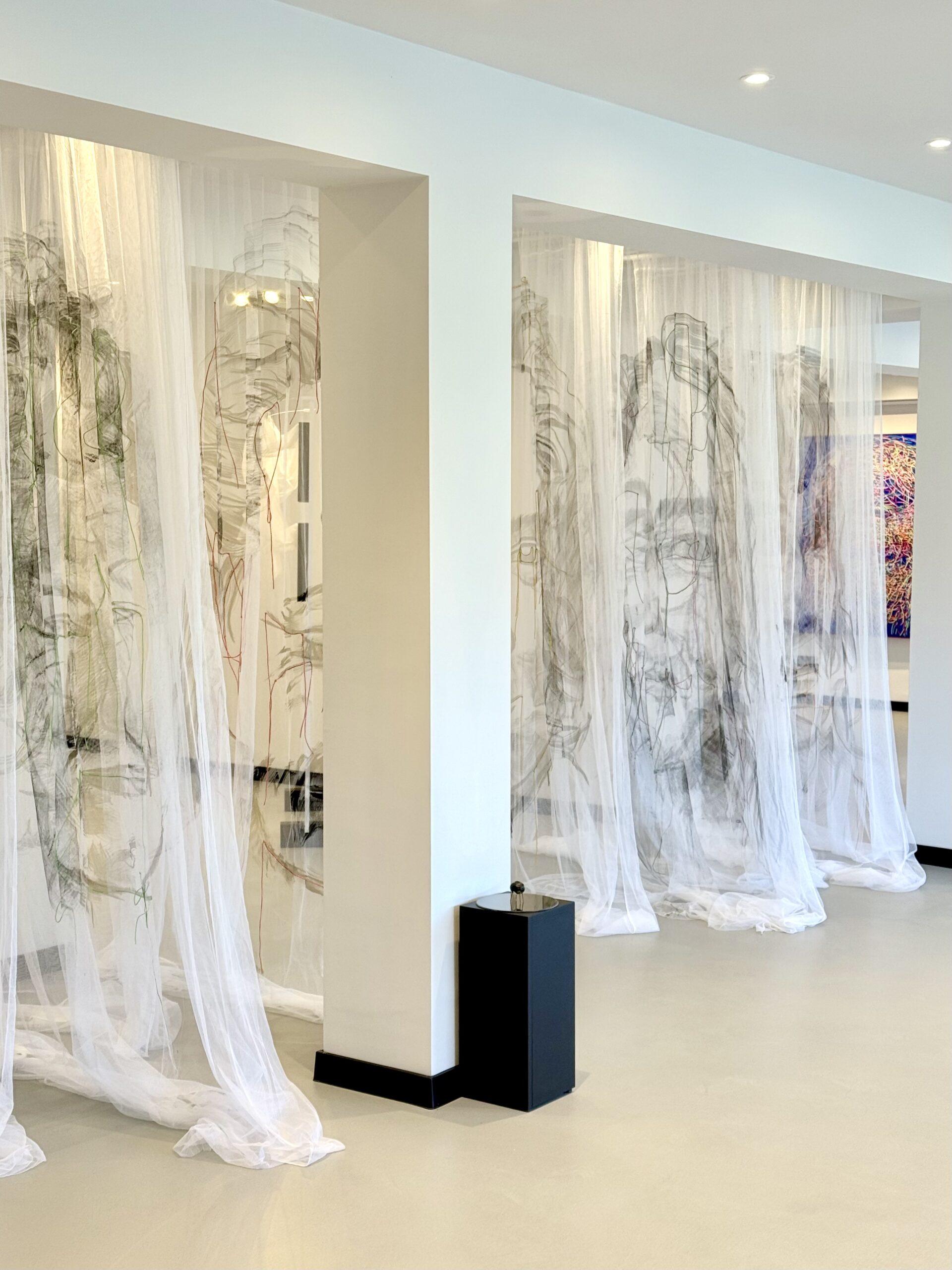
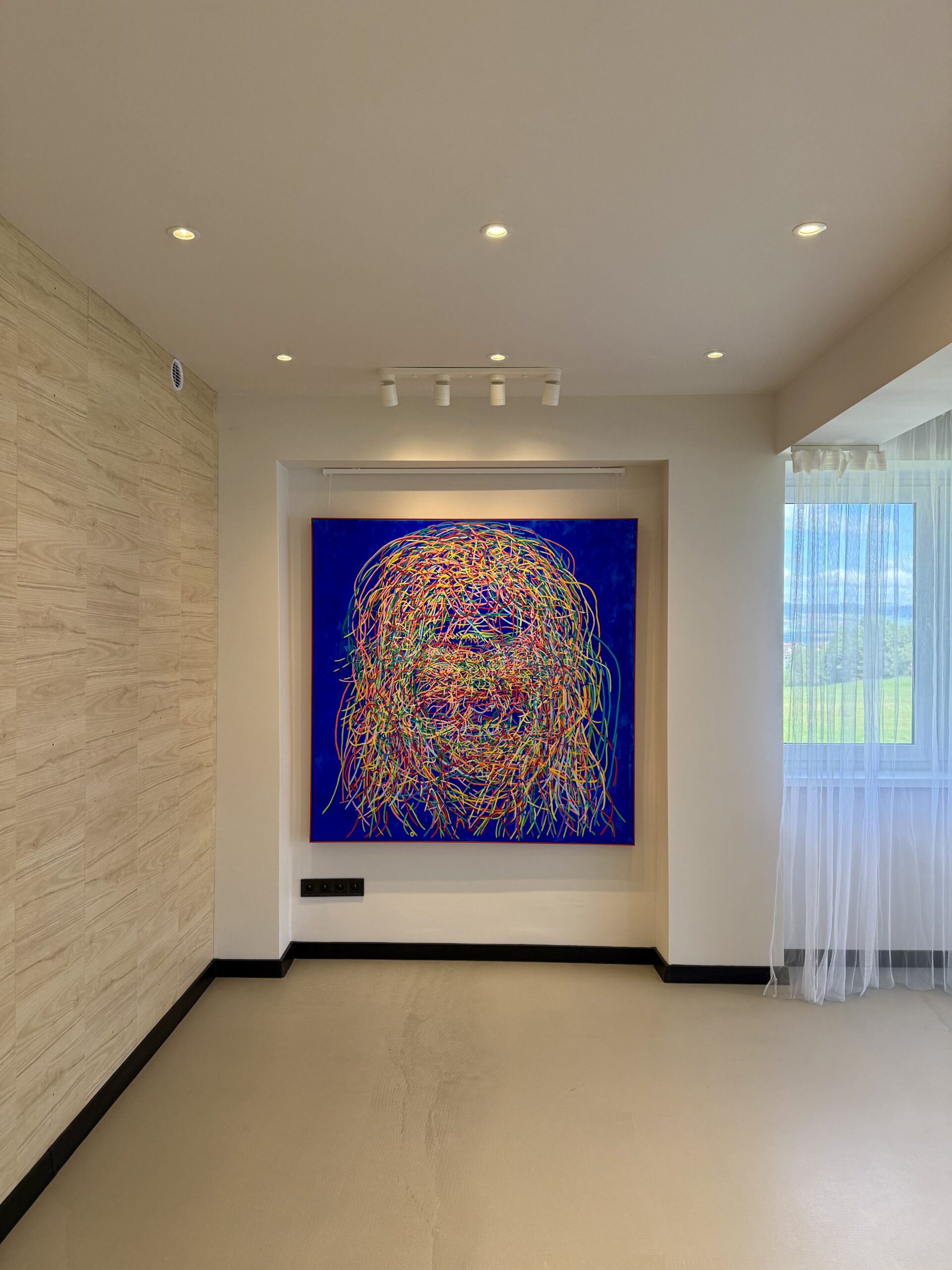
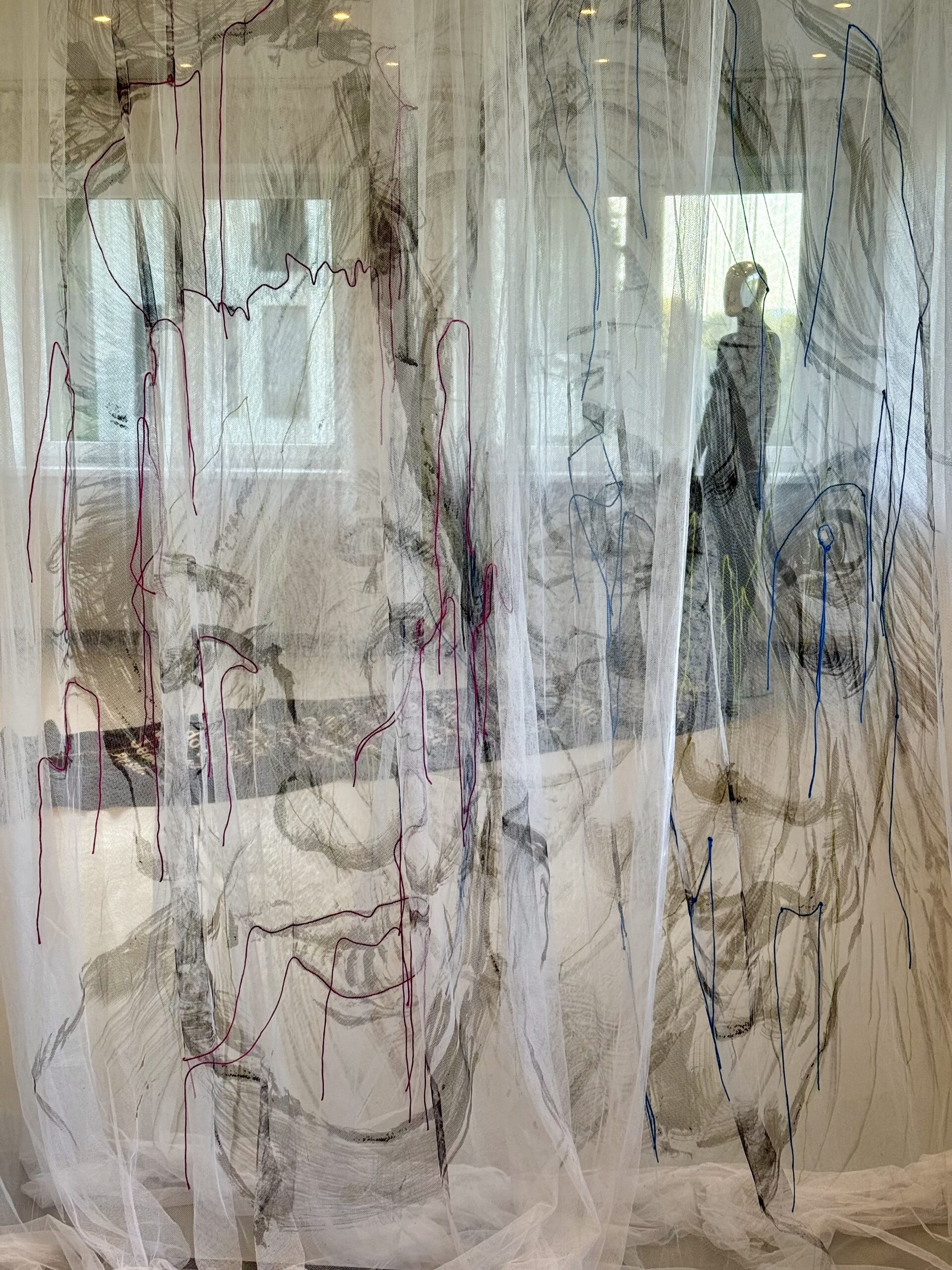
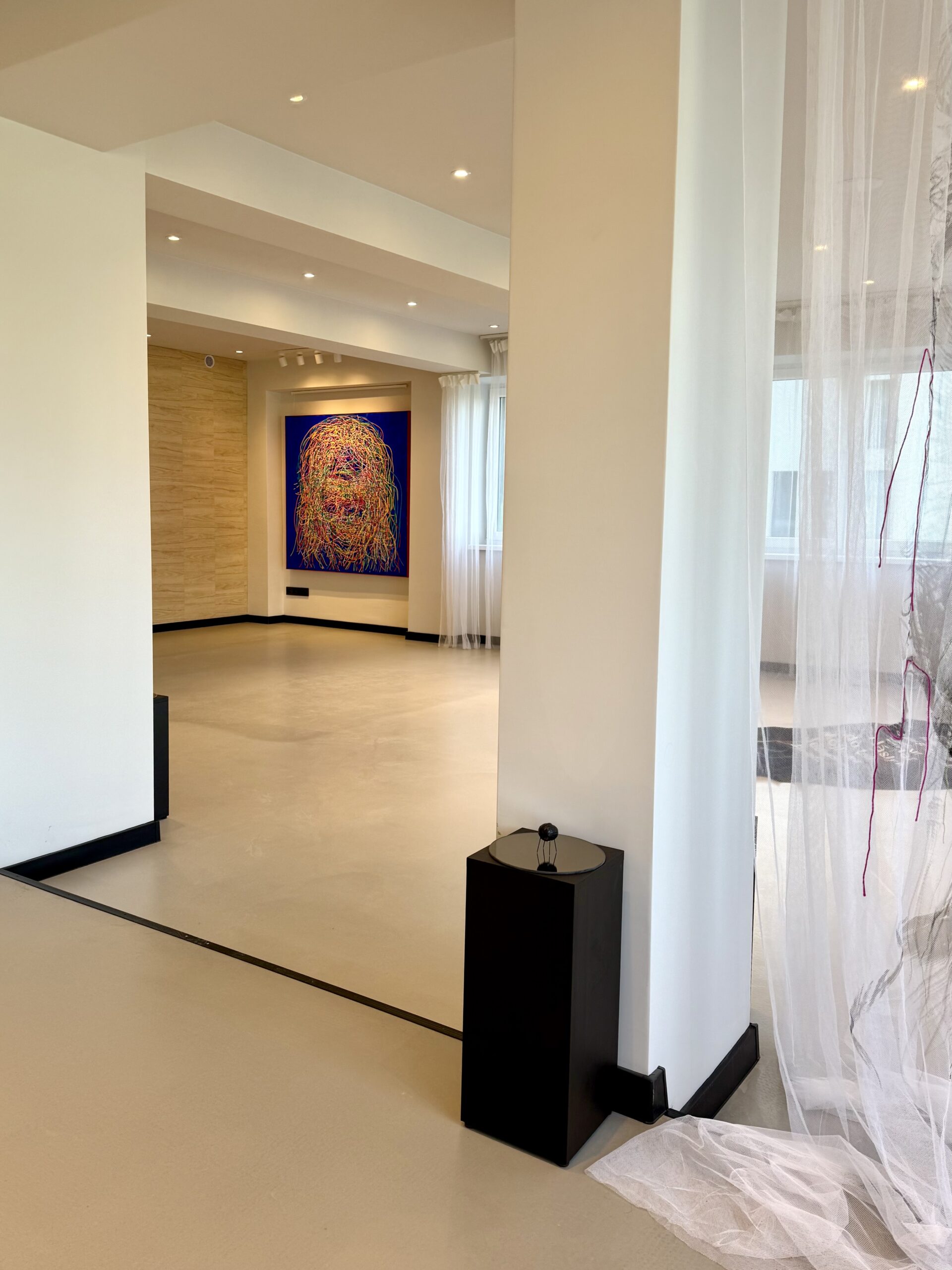
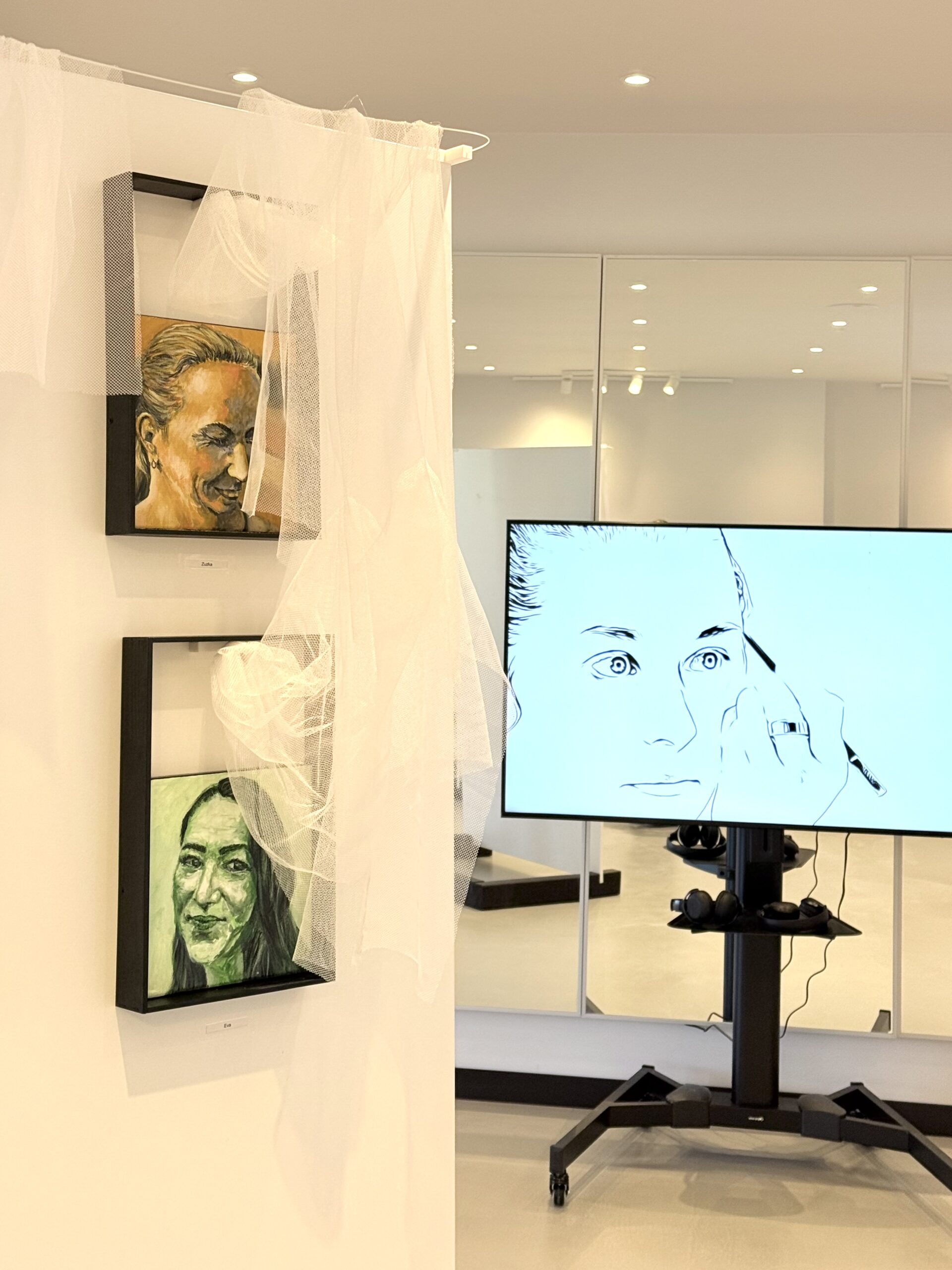
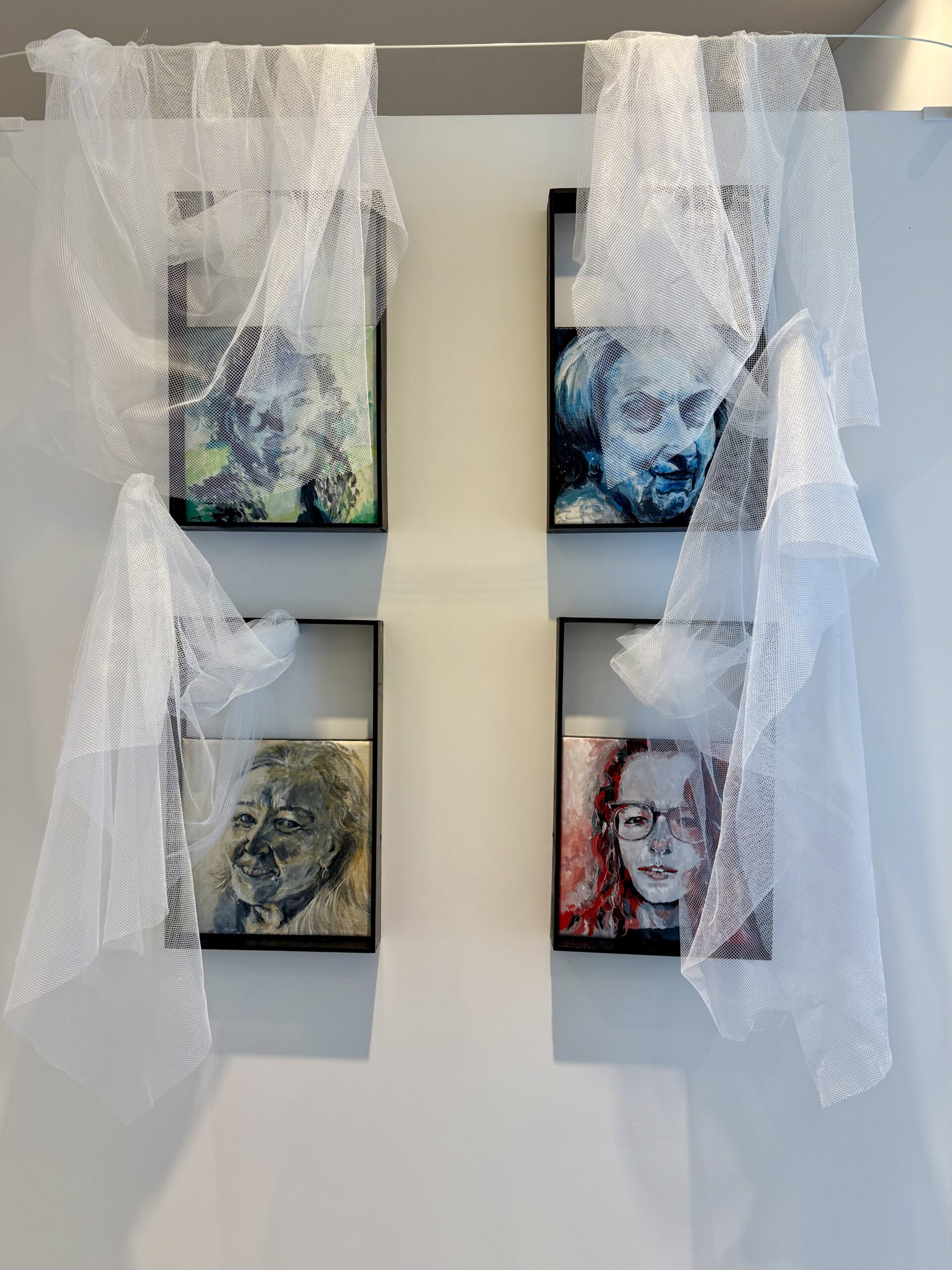
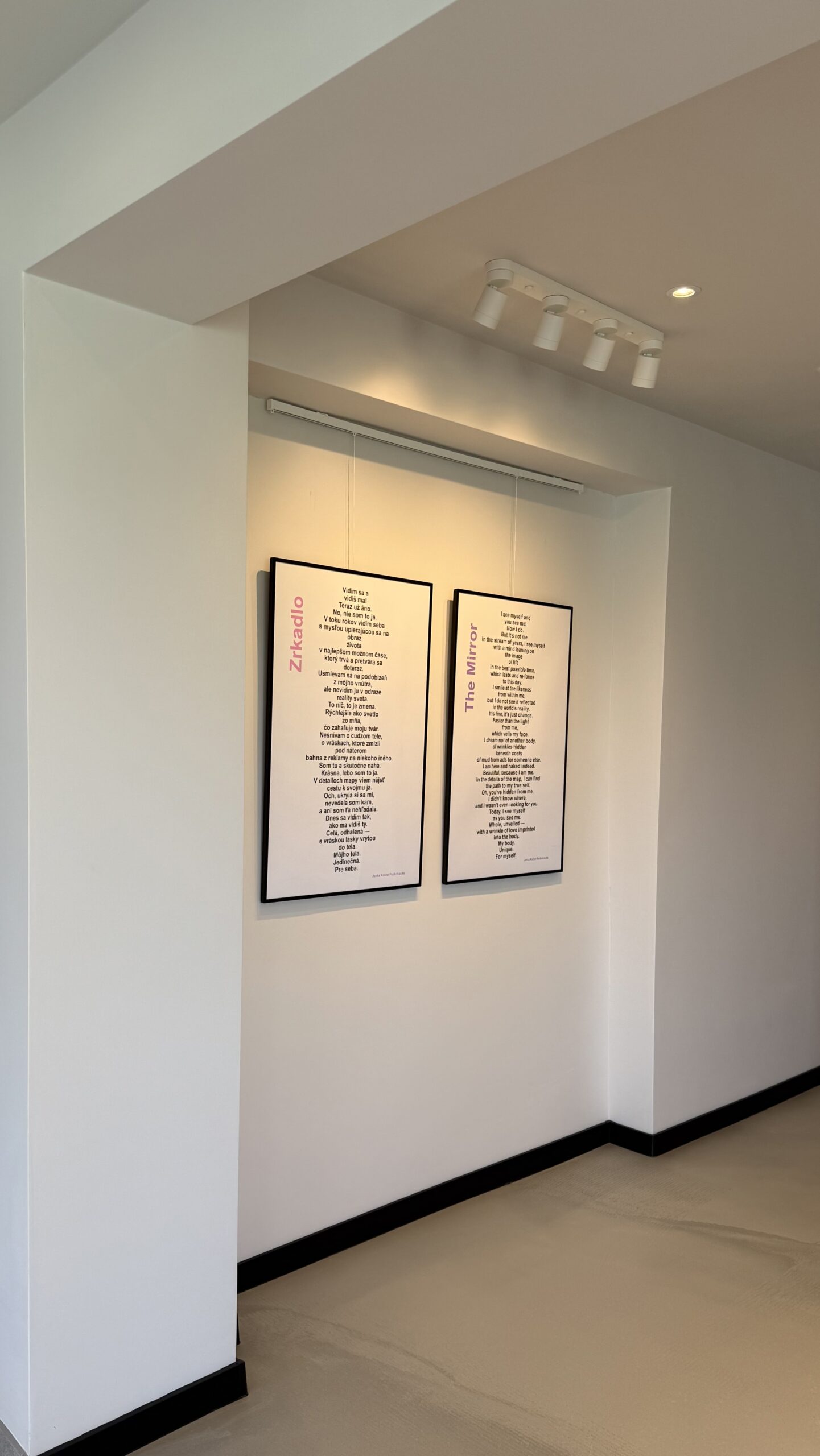
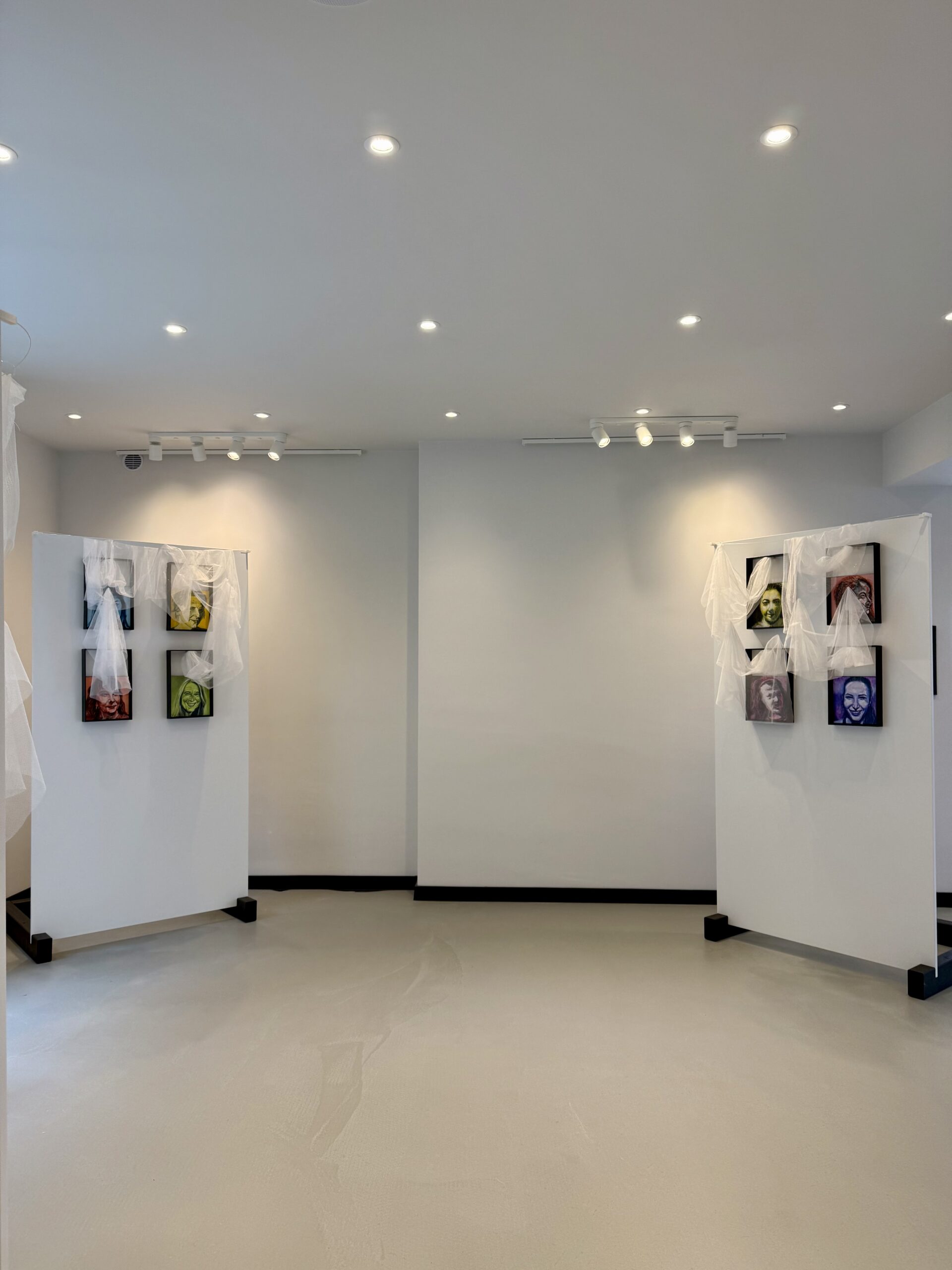
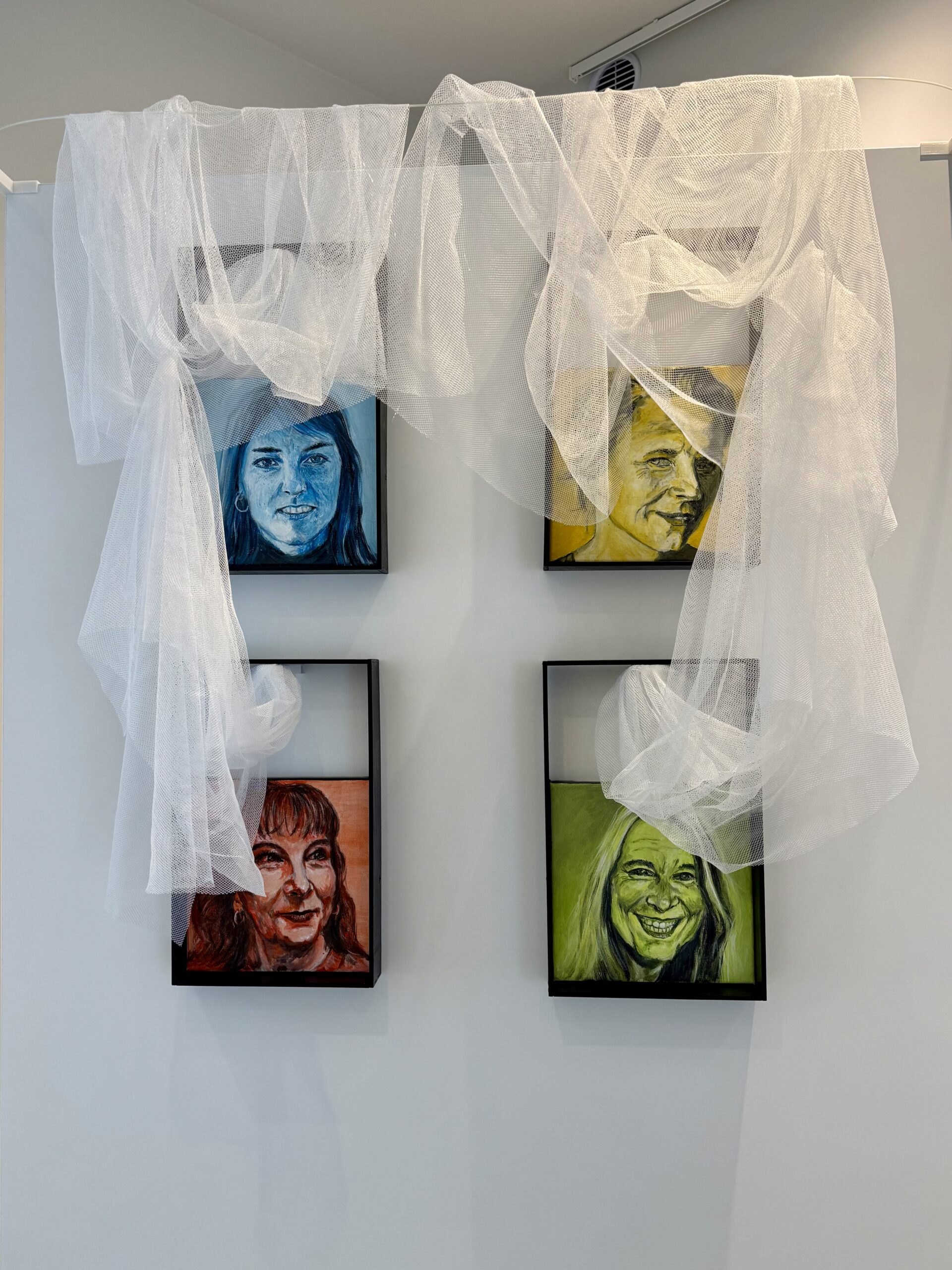
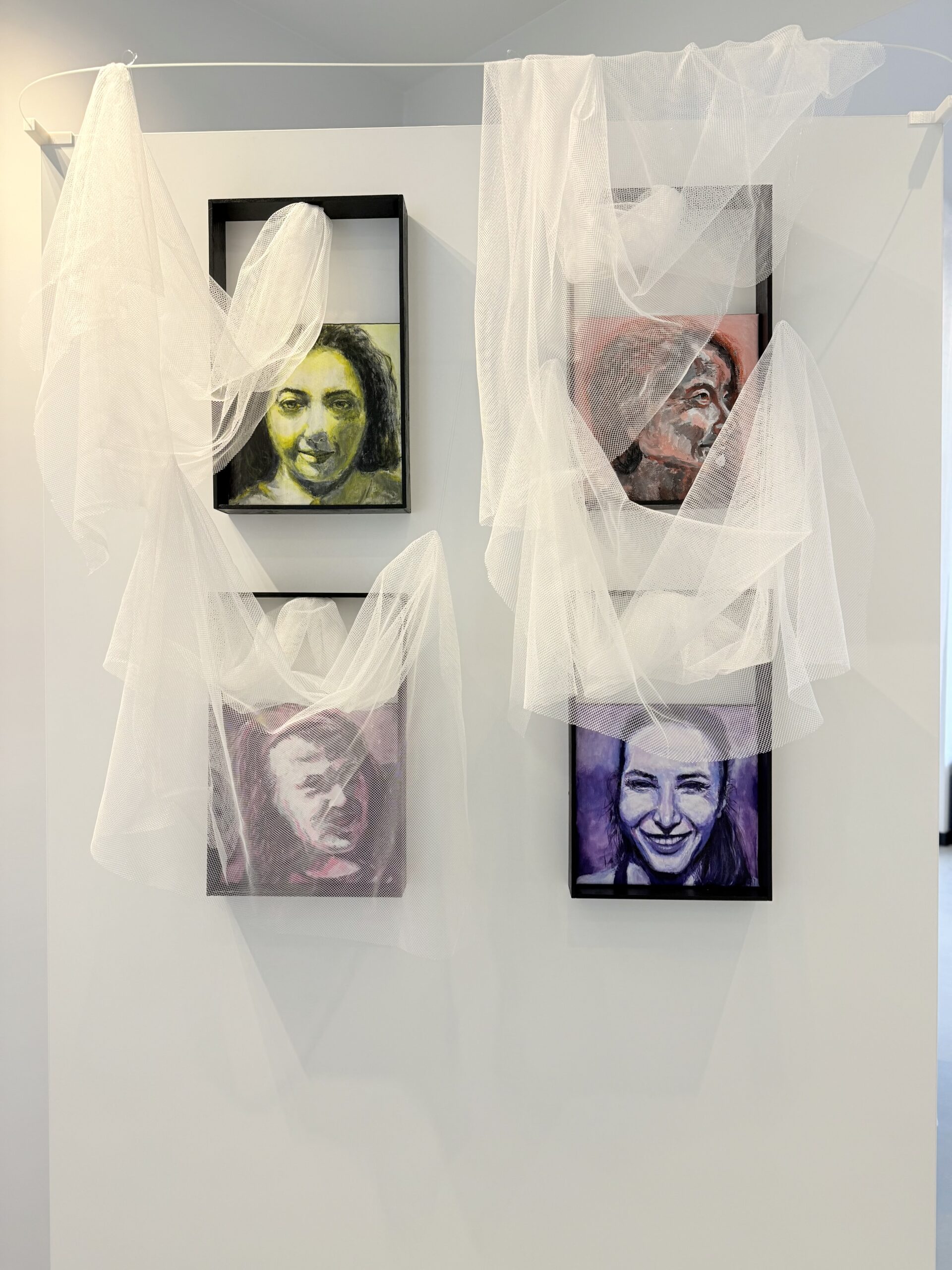
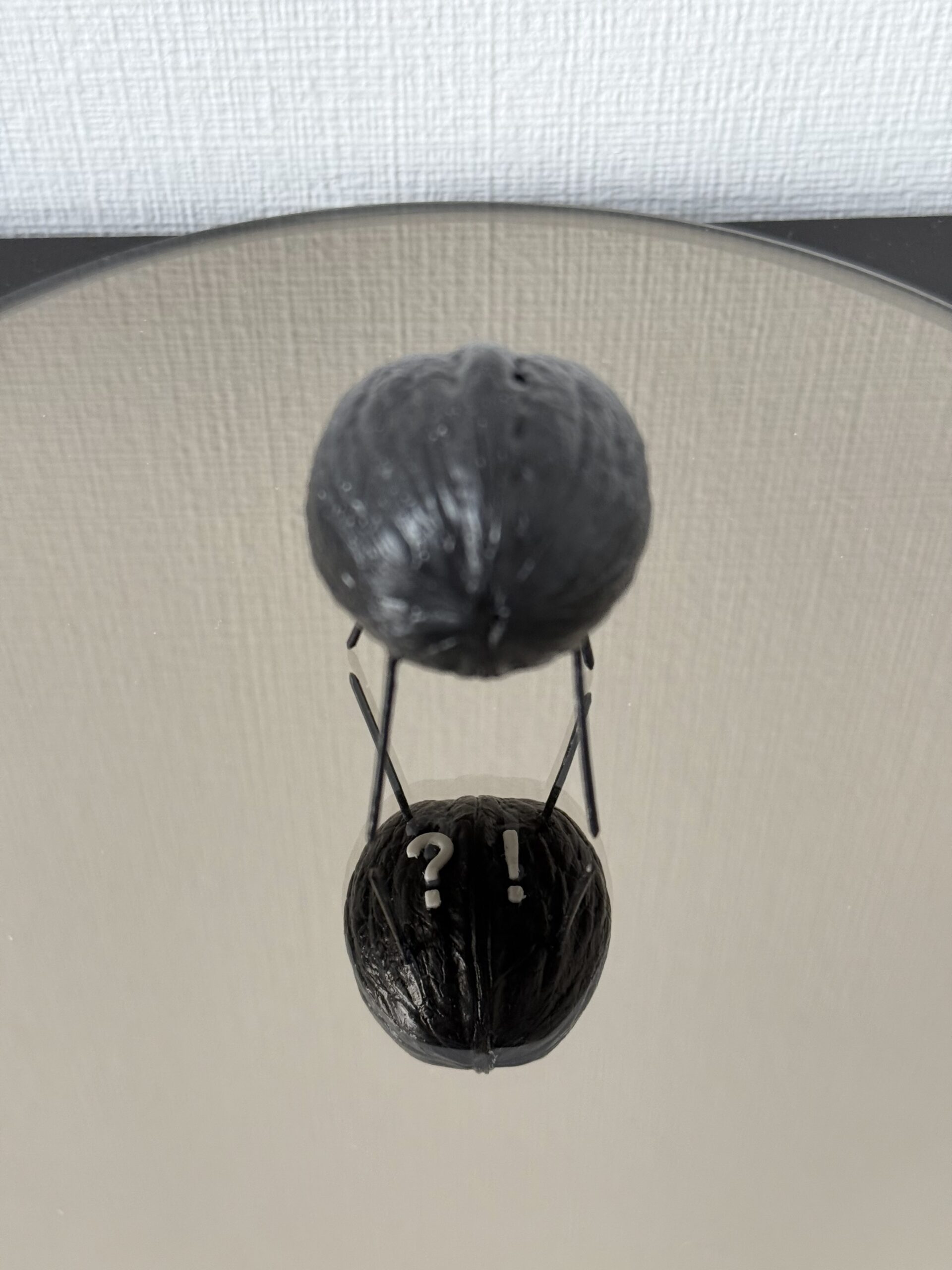
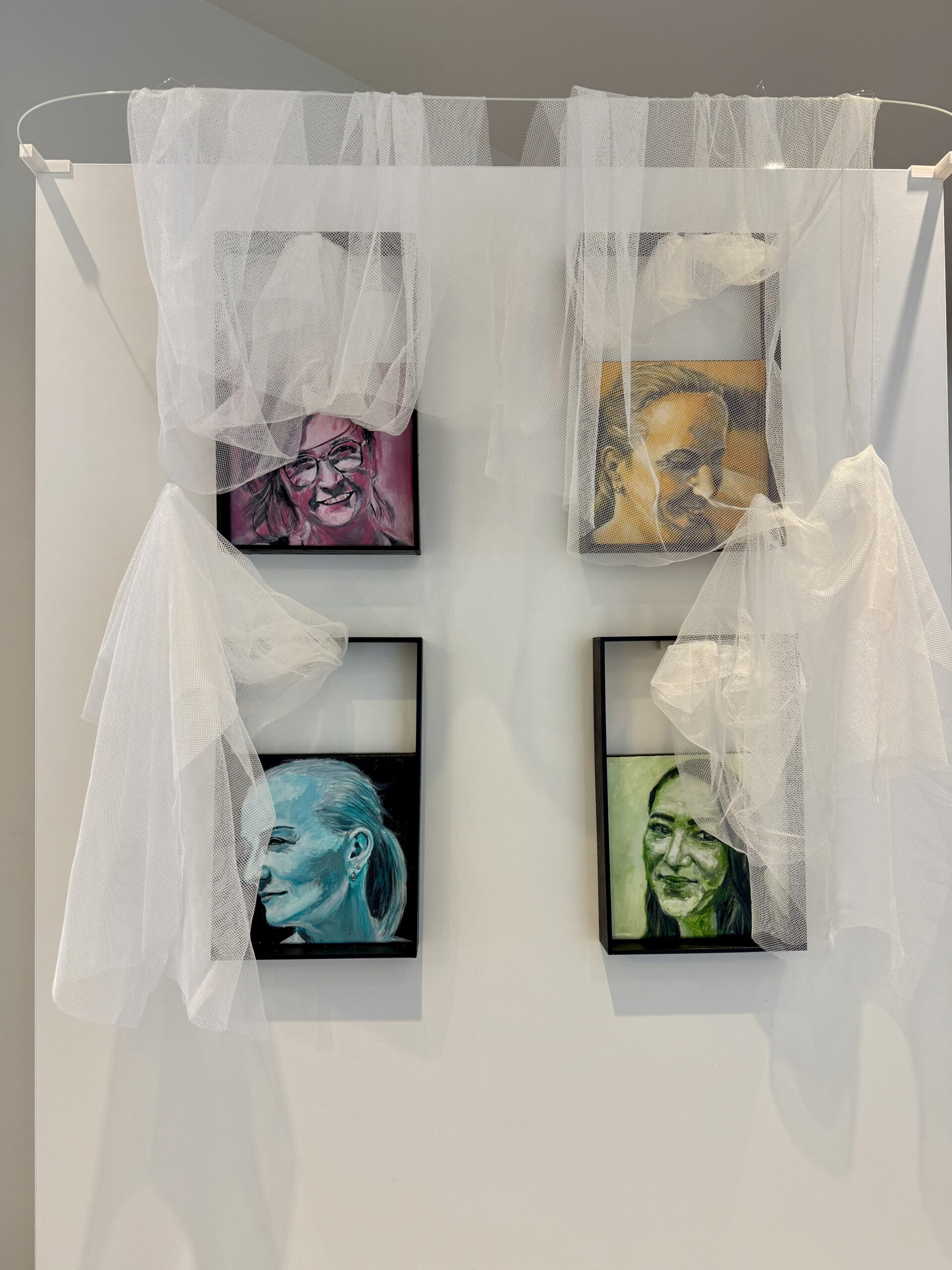
The Beautiful Women Series exhibition took place at ĎURKOVEC Centrum,
Spišské Tomášovce, Slovakia banquet hall
26. 04. 2025 opening, 01. 05., 08. 05., 15. 05, 2025 (all guided tours)
Tokyo International Art Fair 2024 TIAF
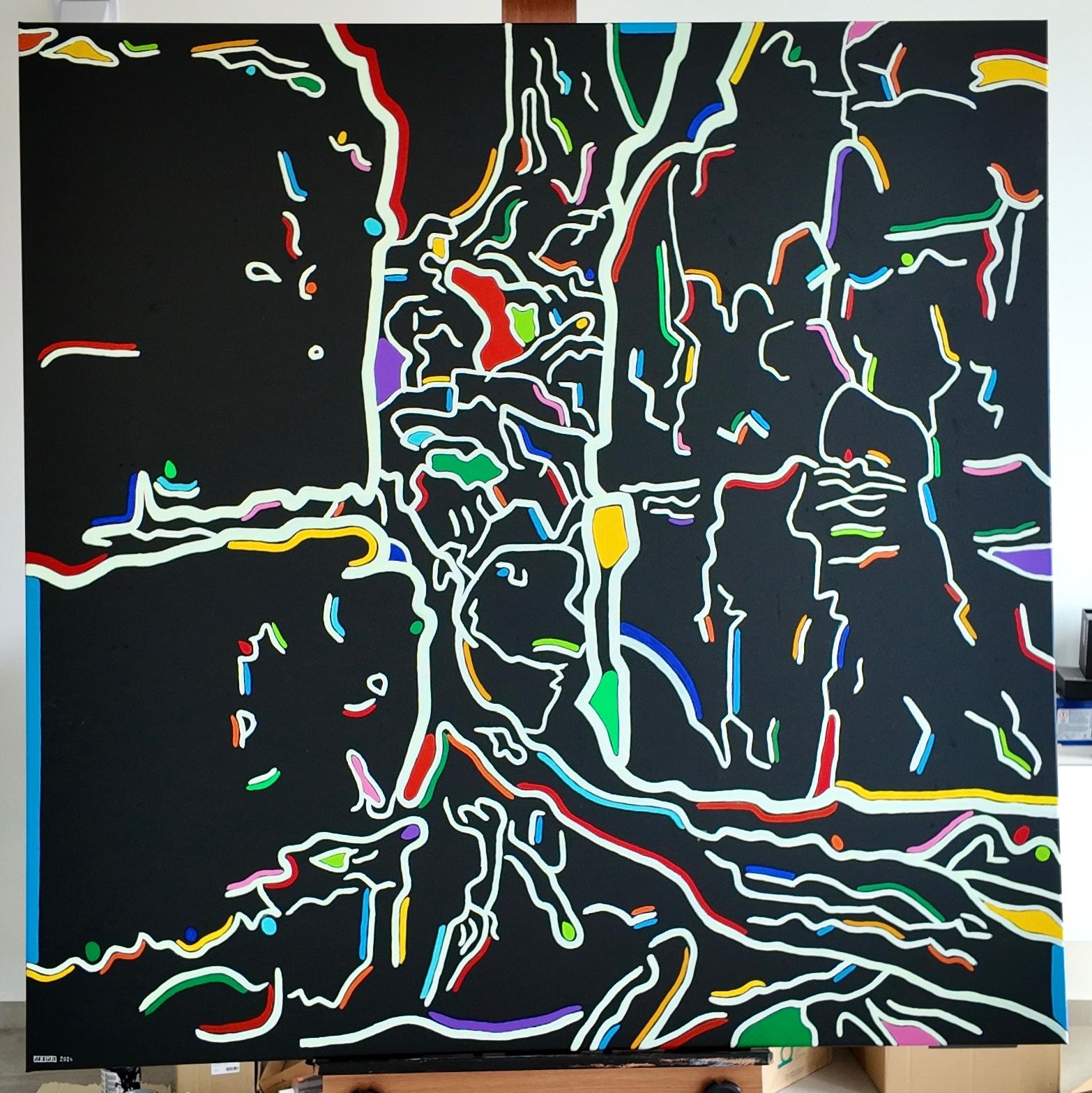
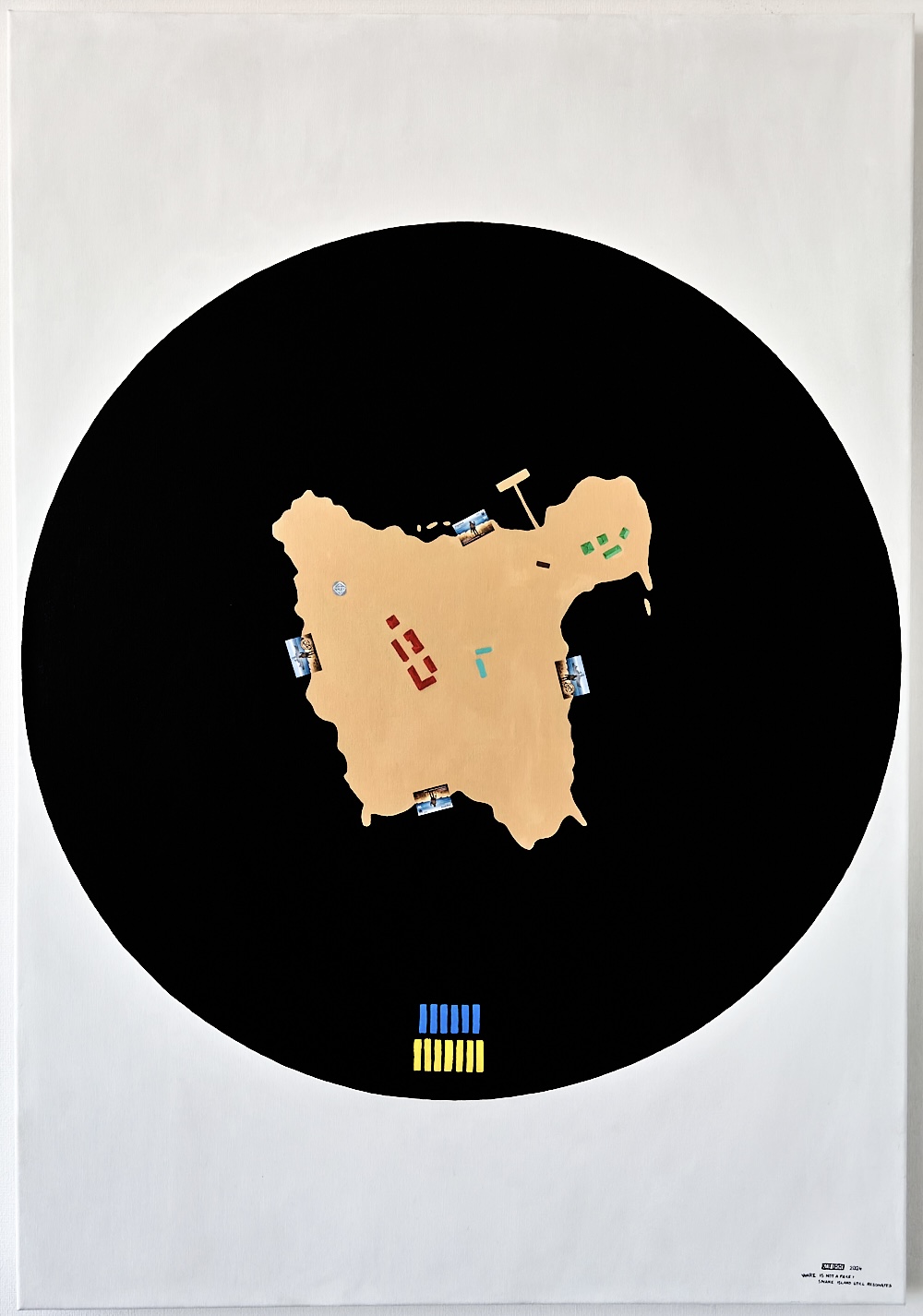
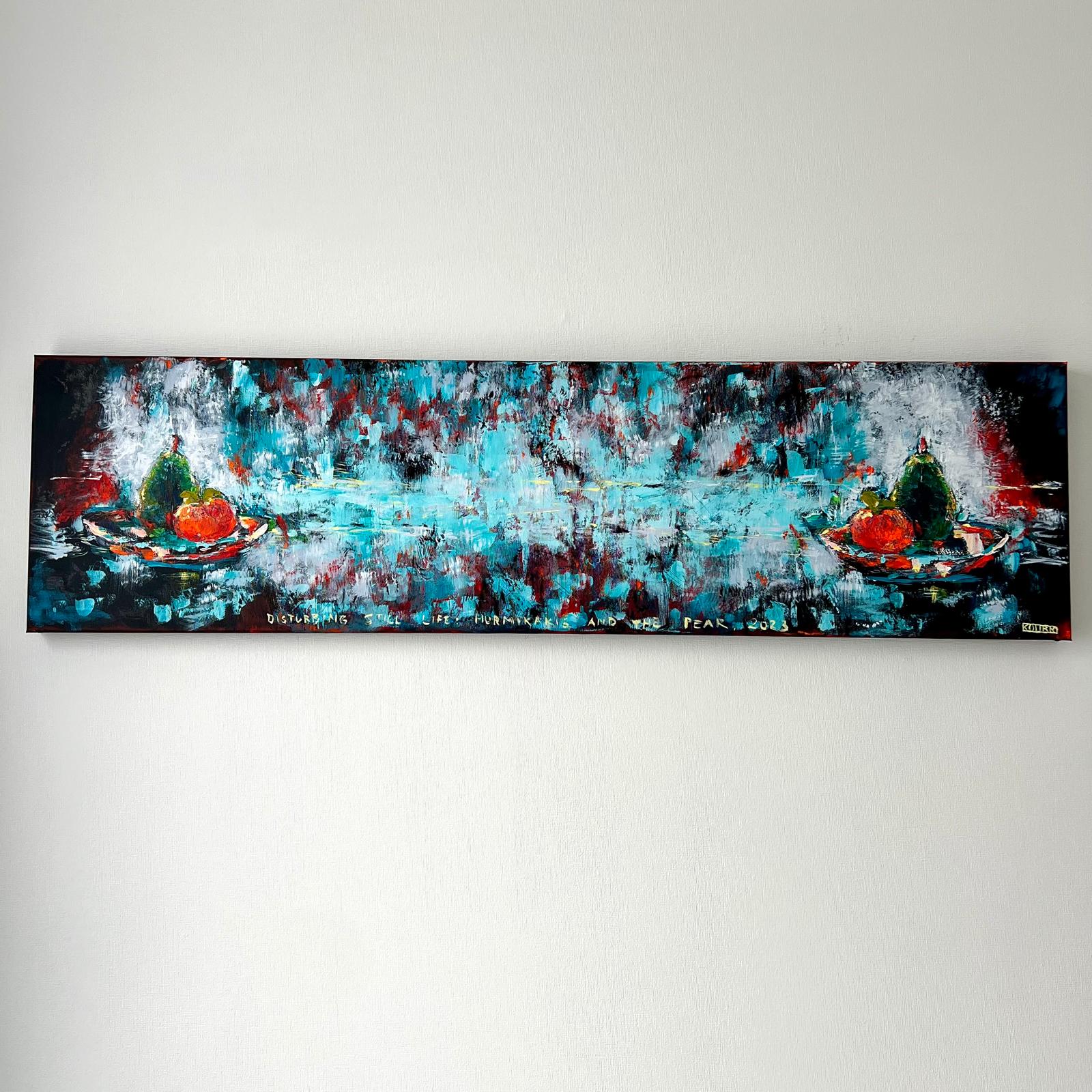
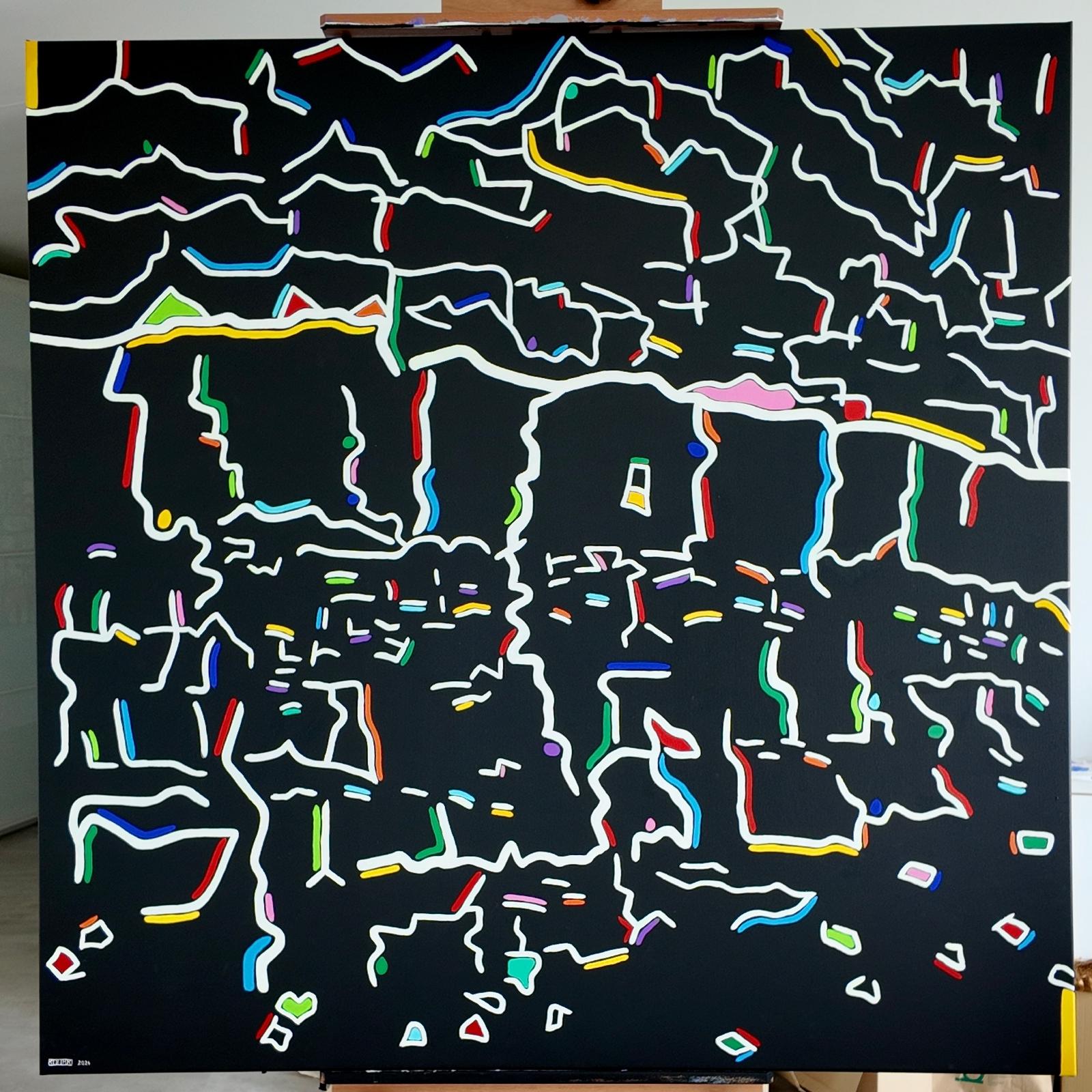
29 – 30 November 2024
catalogue page 32
Displayed works:
Incandescently Cool Nature, Number 7, 2024
War Is Not a Fake: Snake Island Still Resonates, 2024
Disturbing Still Life: Hurmikakis and the Pear, 2023
Incandescently Cool Nature, Number 9, 2024
Incandescently Cool Nature, Number 7 and Number 9 have a special effect when displayed in the dark. The “white” phosphorescent lines emit light, creating a subtle glow. This effect is visible to the human eye both in darkness and under light, drawing the viewer deeper into the painting.
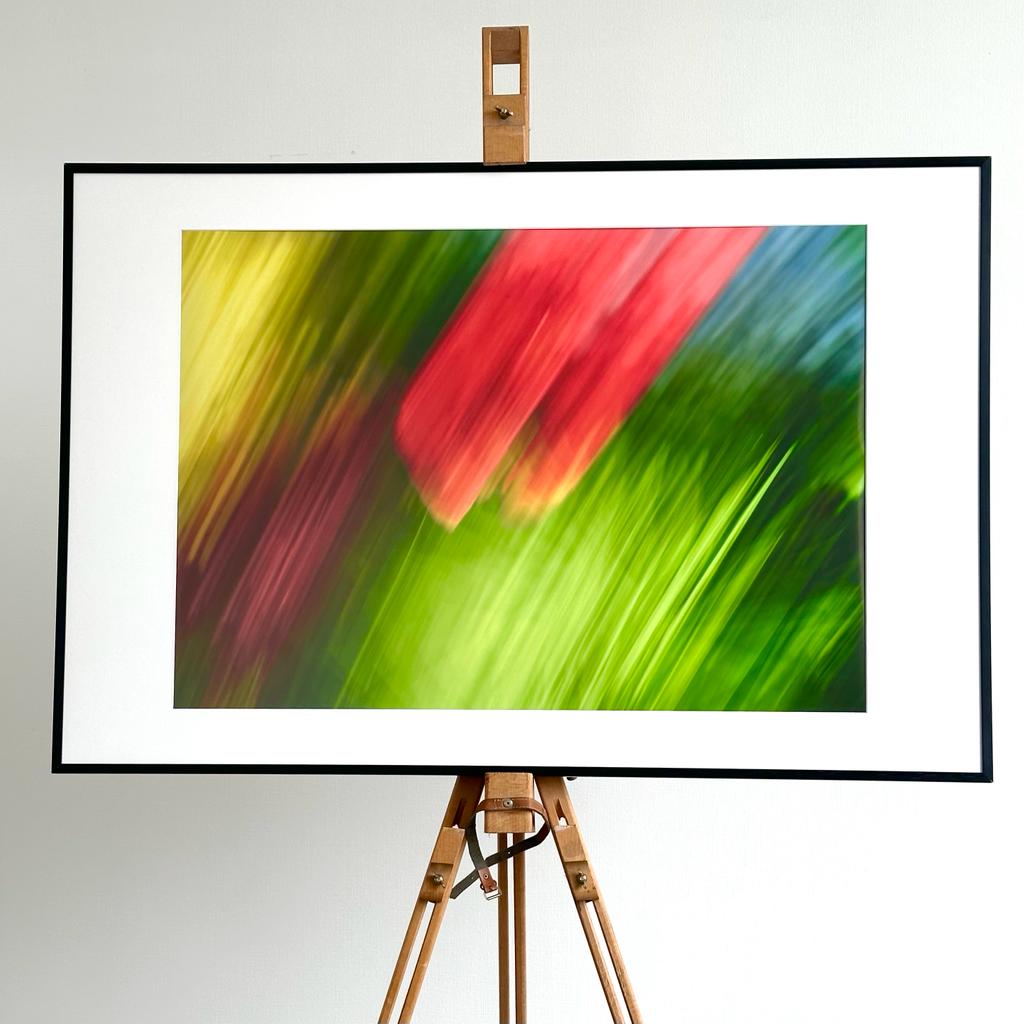
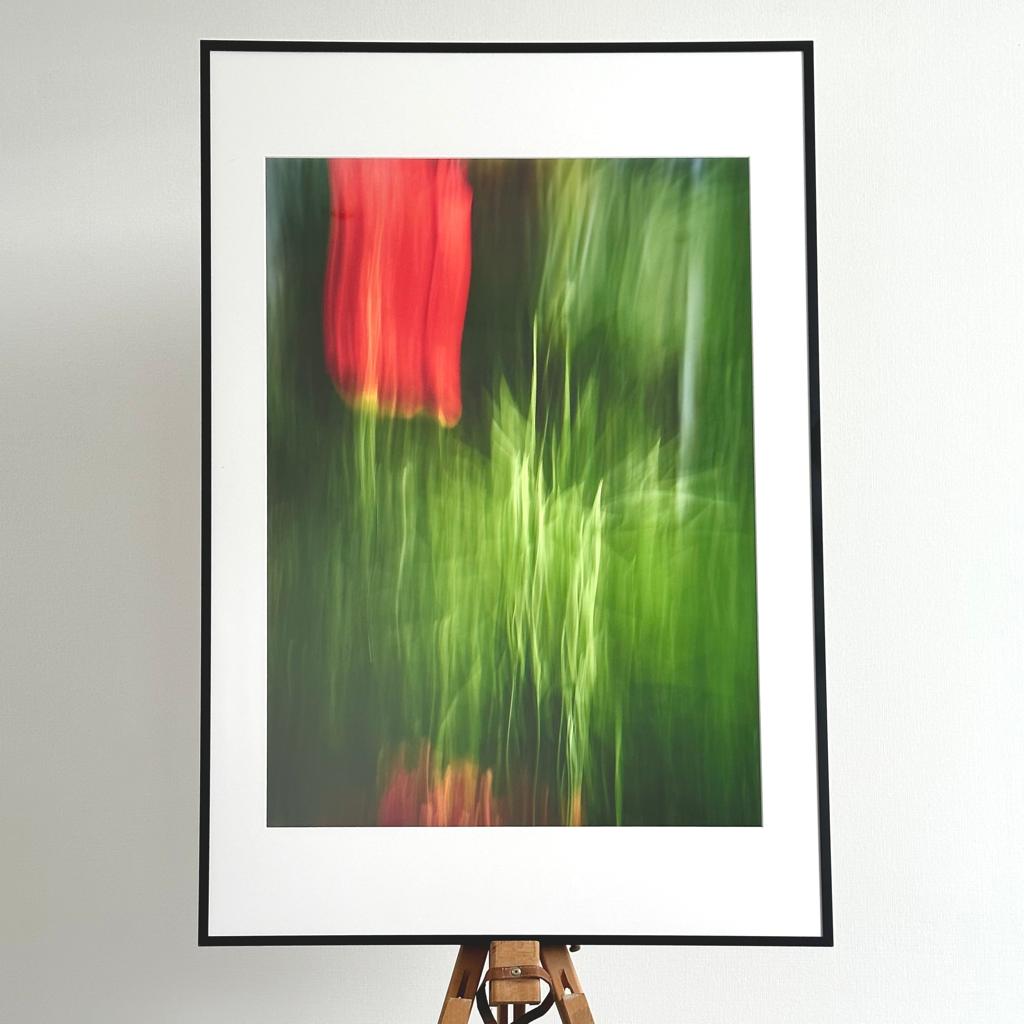
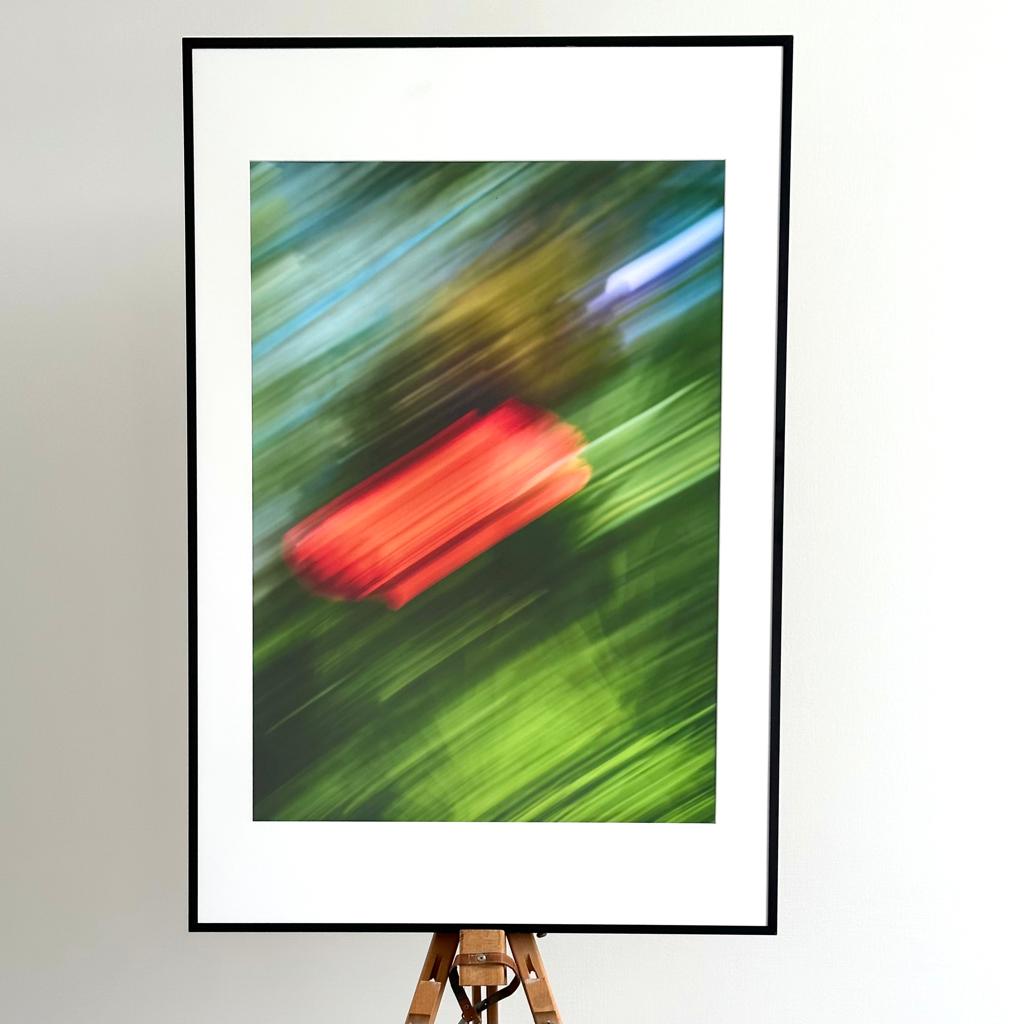
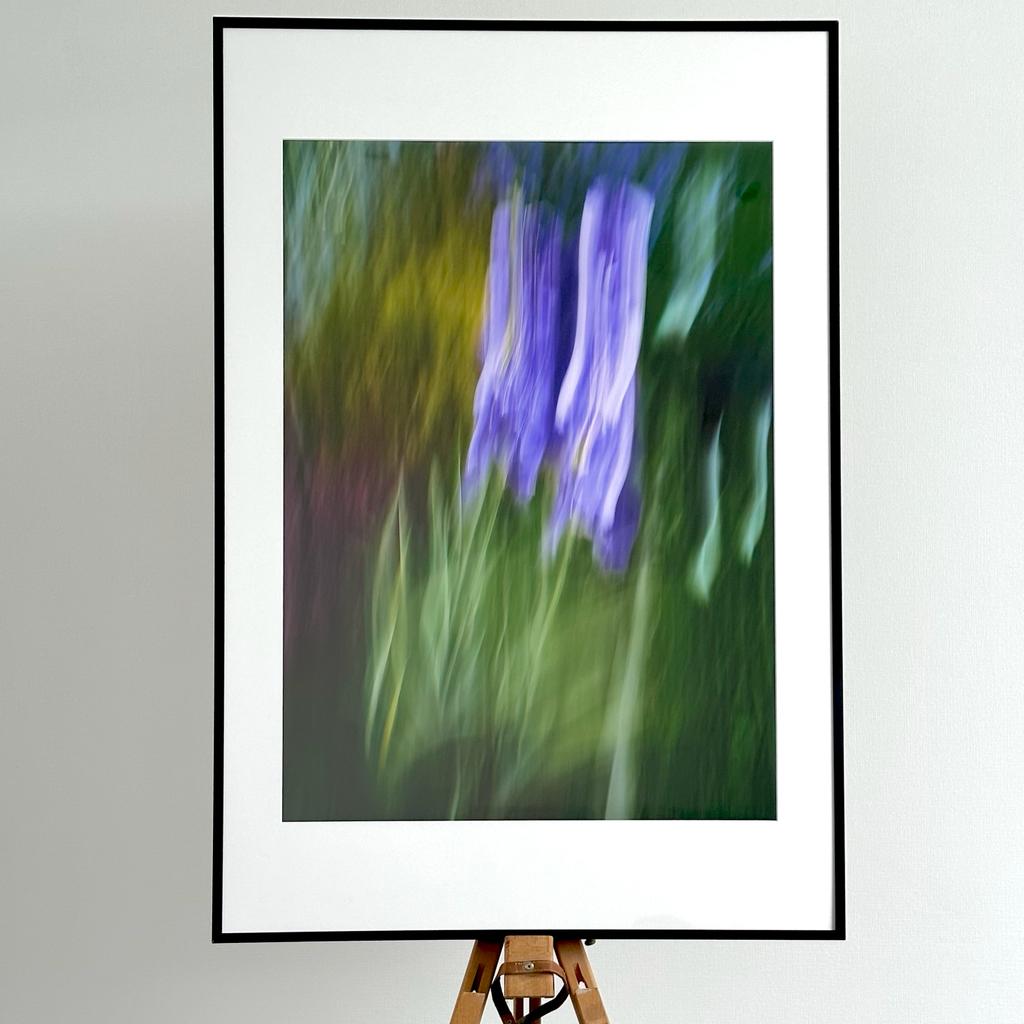
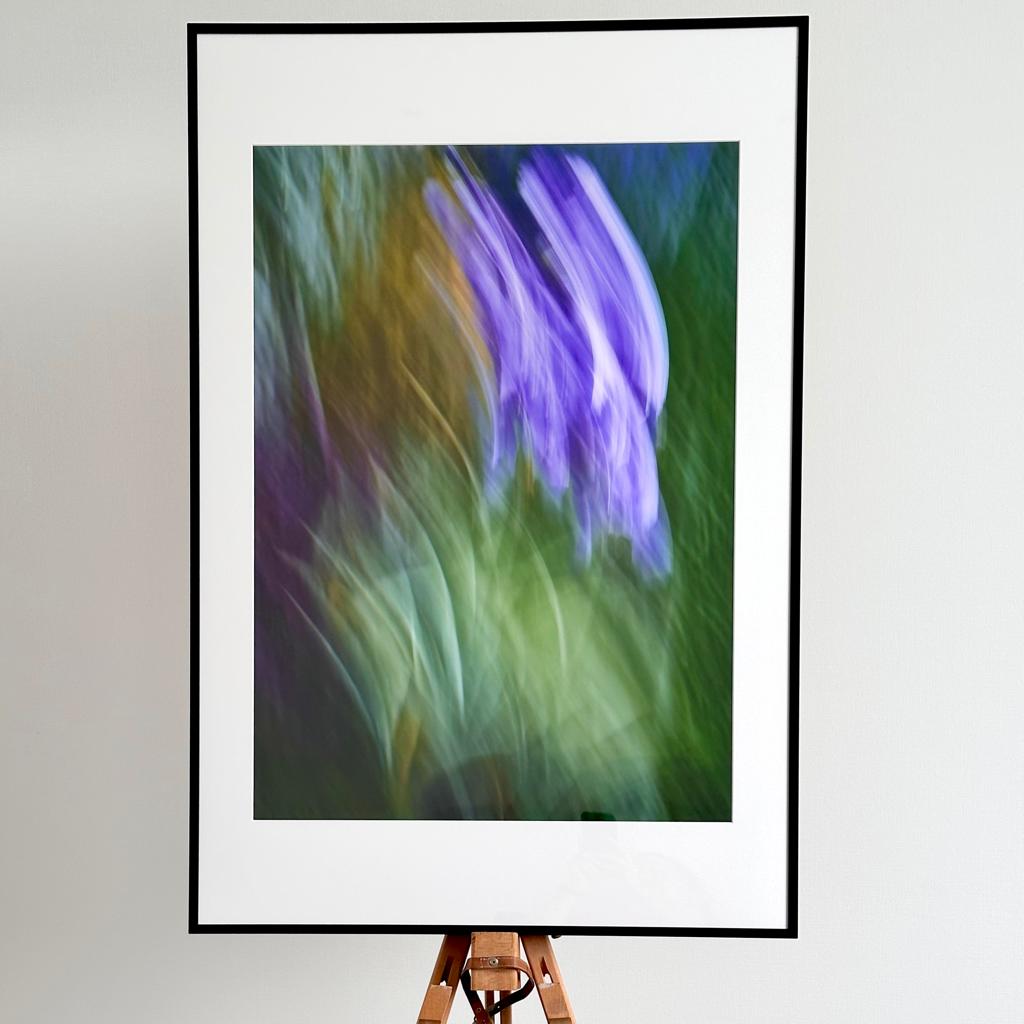
2023: Abstract Vivid Flowers
Exhibition Abstract Vivid Flowers was curated for the private space of a newly opened gourmet restaurant to enhance the interior through color. The placement of the photographs within the space invites guests to discover both the unique artworks and the restaurant’s atmosphere.
Quinto-fori, Spišský Štvrtok, Slovakia
August, September, October 2023
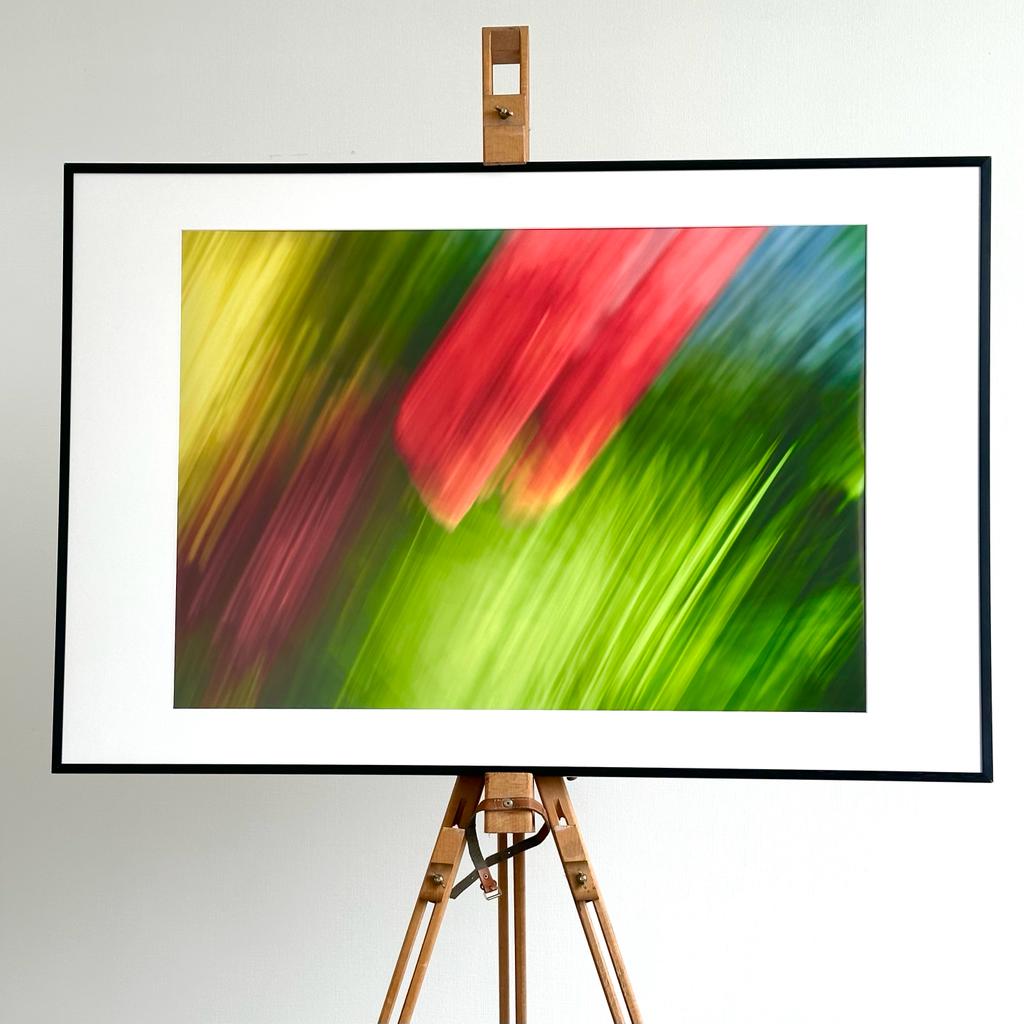
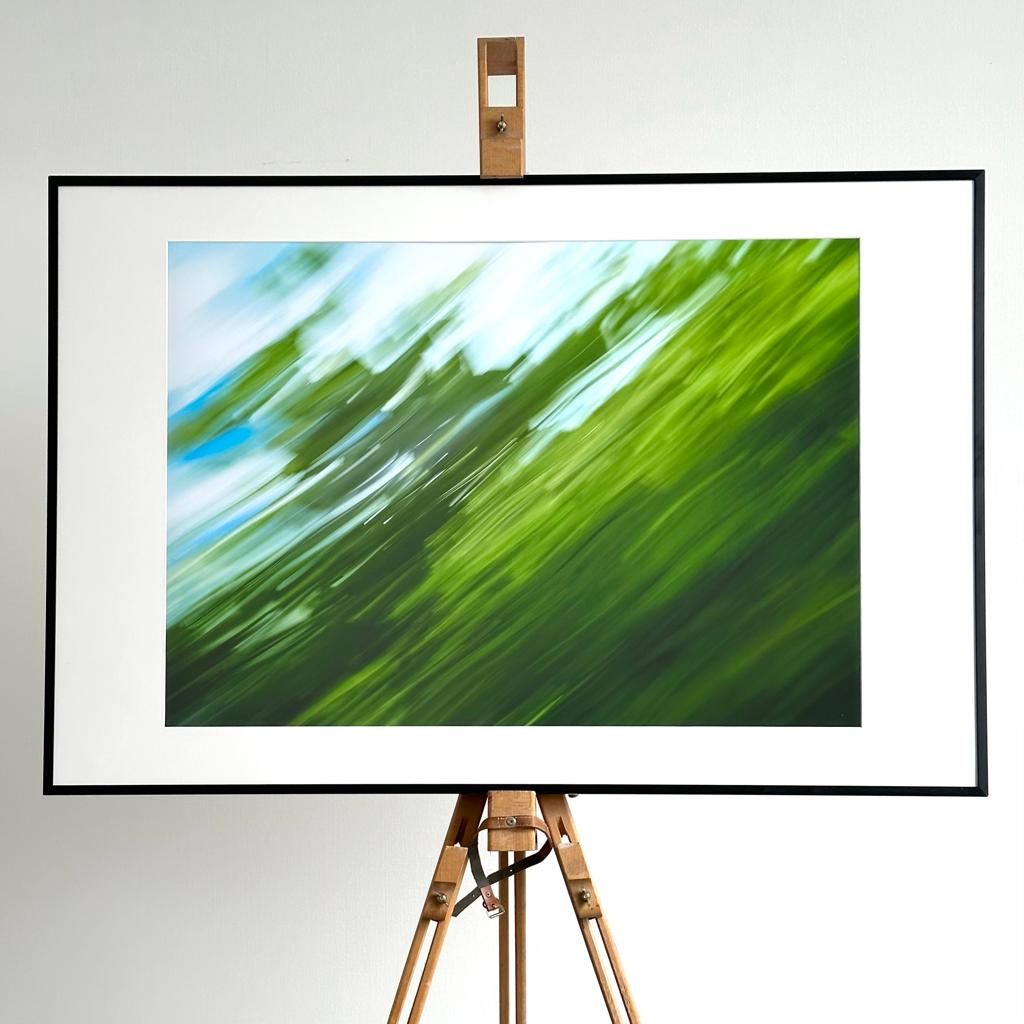
Talk to me
Have any questions? I am always open to talk about your business, new projects, creative opportunities and how I can help you.